Where we left offAdam's line has run all the way down to Noah and his three sons, and the earth has filled with violence.
One man is told to build a boat with three decks and no rudder. When the water finally goes down he tests it with birds, and what he gets back the second time is a single leaf.
Why these chapters go togetherGenesis 6 to 9 is one arc with a hinge in the middle: four chapters that go up with the water and then come down with it. Ending at 9 matters, because the promise and its sign are what the flood is traveling toward.
What We Will Learn
Section
What you will practice
Word Study
Words for character, building, measure, worship and promise: righteous, ark, cubit, prevail, sacrifice, covenant, sign
Bible Study
How to hold a general instruction beside a more detailed one, and how to track what changes across a repeated test
Lokosmos Treasure Wisdom
Ancient units of length, the real waterproofing of Mesopotamian boats, and flood stories written on clay
Chapter Summary
Ch.
What happens
6
Instructions for the Ark — The account describes human wickedness, corruption and violence, but Noah finds favor with God and is called righteous and blameless in his generation. God announces judgment and tells Noah to make an ark, giving its dimensions in cubits, its three decks, its door and its covering of pitch. God promises to establish a covenant with him, and tells him to bring his household, living creatures and food aboard. Noah does all that he is commanded.
7
The Waters Rise — Noah's household and the animals go into the ark. The chapter distinguishes clean animals and birds, which come in greater numbers, from those that are not clean. Rain falls for forty days and forty nights, the rising water lifts the ark clear of the ground, and the waters prevail on the earth for a hundred and fifty days.
8
The Waters Go Down — The ark comes to rest on the high country of Ararat. Noah sends out a raven, then a dove three separate times, and watches what each flight tells him. The second dove returns with a freshly plucked olive leaf; the third does not return at all. Once the ground is dry God tells Noah to bring everyone out, and Noah builds an altar and offers a sacrifice.
9
A Promise and Its Sign — God blesses Noah and his sons and tells them to be fruitful and fill the earth. He then promises never again to destroy every living thing with a flood, and gives the bow in the clouds as the sign of that covenant — for Noah, for his descendants and forevery living creature, in all generations to come.
Part 1 · The Beginning · Genesis 6–9
Word Study
Study 7 key words from Genesis 6–9, then answer each question.
📏
💎 Lokosmos Treasure Wisdom · a true fact behind the storyHow Long Was a Cubit, Really?
Open your Bible atGenesis 6:15
Money & Measures · The CubitGenesis 6:15 gives the ark as 300 cubits long, 50 wide and 30 high. So how long is a cubit? It is a forearm, from elbow to fingertip. That sounds hopeless, because arms differ. But two ancient cubits have been measured. A water tunnel under Jerusalem has writing in it. The writing says the tunnel is 1,200 cubits long. The tunnel is still there, and it runs about 533 meters. That makes its cubit close to 44 centimeters. Egypt used a longer one, about 52.5. So the ark is about 133 meters, or 24 meters more, depending whose arm.
The word
Say it
What it means
Where it is
cubit
KYOO-bit
the length of a forearm, elbow to fingertip
Genesis 6:15
Written the way the word sounds, not in its own alphabet — this is here to let you hear it, not to teach you to spell it.
Why this helps you read the BibleThe three numbers never change. So the shape of the ark is certain even when its size in meters is not. Telling a fixed detail from an estimate keeps you honest about what the Bible actually states.
The ark at 300 × 50 × 30 cubits
The same ark, measured two ways
Dimension
Genesis
Short cubit44 cm · Siloam tunnel
Royal cubit52.5 cm · Egyptian rods
Length
300 cubits
133 m
158 m
Width
50 cubits
22 m
26 m
Height
30 cubits
13 m
16 m
Measured drawing · Genesis gives three dimensions, three decks and a door in the side, but no hull shape — the plain rectangle drawn here is a convention, not a reconstruction, and the curved boat of most pictures is an illustrator's addition. The proportions are fixed; the meters are not, because the cubit is not.
Dimensions and decks: Genesis 6:14–16. Cubit lengths: the Siloam tunnel inscription (1,200 cubits over a measured ~533 m) and surviving Egyptian royal cubit rods. Drawn for Lokosmos Academy.
⚖ Still argued aboutWhat gopher wood is. The word occurs once in the Hebrew Bible and nowhere else in Hebrew, so cypress, cedar, and a treatment rather than a species are all guesses.
🗣 Say itNoahNOH-uh(nō-ə)ShemSHEM(shem)HamHAM(ham)JaphethJAY-feth(jā-fəth)AraratAIR-uh-rat(er-ə-rat)GilgameshGIL-guh-mesh(gil-gə-mesh)
righteousadj.Gen 6:9
Living in a way that pleases God; doing what is right
“The passage describes Noah as righteous and blameless in his generation.”
arkn.Gen 6:14
The large vessel Noah is told to build
“Noah builds the ark according to God's instructions.”
cubitn.Gen 6:15
An ancient unit of length based on the forearm
“The ark's three dimensions are all given in cubits.”
prevailv.Gen 7:24
To continue strongly or become powerful
“Genesis 7 uses this word for what the water does for 150 days.”
sacrificen.Gen 8:20
Something given up and offered to God, often on an altar
“Genesis 8 says Noah's first act on dry ground was to build an altar.”
covenantn.Gen 6:18; 9:9
A solemn promise or agreement that establishes a commitment
“Genesis 9 uses this word for the promise made to Noah and to every living thing.”
signn.Gen 9:12
A visible mark that stands for something else
“Genesis 9 calls the bow in the cloud a mark of what was promised.”
ⓘ The vocabulary words in this list are selected to help you understand and complete this workbook. Some may not appear word-for-word in your Bible. The example sentences are our own wording, written to make the verse clearer — they are not quotations from it. Read each verse in your own Bible.
1Someone who lives in a way that pleases God is described as ___.Gen 6:9
2Two ancient cubits have actually been measured, and they are not the same length.💎 Uses the box aboveGen 6:15
3Fill in each blank with the correct word.Gen 6:15; 7:24
Word choices:cubitprevailsignrighteous- some words will not be used
An ancient unit of length based on the forearm is a . Gen 6:15
To continue strongly or become powerful is to . Gen 7:24
4A visible mark that stands for something else is a ___.Gen 9:12
5A ‘covenant’ is a solemn promise or agreement that establishes a commitment.Gen 6:18; 9:9
6In Genesis 8, a ‘sacrifice’ is a meal Noah cooks for his own household.Gen 8:20
7Fill in each blank with the correct word.Gen 6–8
Word choices:arksacrificecubitcovenant- some words will not be used
Noah is told to build an and to coat it with pitch. Gen 6:14
Once he is back on dry ground he offers a . Gen 8:20
Part 2 · The Beginning · Genesis 6–9
Understanding
Show you understood what happens in Genesis 6–9.
🧠
💎 Lokosmos Treasure Wisdom · a true fact behind the storyTwo of Every Sort, and Then Seven Pairs
Open your Bible atGenesis 6:19–20, then Genesis 7:2–3
Close Reading · Two Instructions, Not OneRead Genesis 6:19–20 first. It says two of every living thing, male and female. Now read Genesis 7:2–3, one page later. It says seven pairs of every clean animal and bird, and one pair of everything else. Both of these are instructions. A reader who keeps only the first has quietly lost the second. Watch what is missing, too. Nobody explains what clean means here. The lists that sort clean from unclean do not arrive until Leviticus. The wide command and the exact one are meant to be held together.
The word
Say it
What it means
Where it is
min
MEEN
kind, or sort — a broad grouping
Genesis 1:11
Written the way the word sounds, not in its own alphabet — this is here to let you hear it, not to teach you to spell it.
Why this helps you read the BibleWhen a story says a thing twice with different details, read both. The second time is usually adding, not fixing. Scripture is often fuller than one reading shows. The rest is found by reading again.
Two instructions, one page apart
Diagram of two stated instructions · every phrase in both rows is in Genesis 6:19–20 or 7:2–3. Setting them one above the other is a way of reading them together. Genesis does not number them, does not call either one a correction, and does not explain here what clean means.
Verses: Genesis 6:19–20 and 7:2–3. Drawn for Lokosmos Academy.
1What conditions does Genesis 6 connect with the announced judgment?Gen 6:11–13
2Which detail is part of God's instructions for the ark?Gen 6:14–16
3What does Noah do first to test whether the waters have gone down?Gen 8:6–7
4What does the dove bring back on its second flight?Gen 8:10–11
5Write the numbers 1–5 in the boxes to show the correct order across Genesis 6–9. Number 1 = what happens first.Gen 6–9
The dove comes back carrying a freshly plucked olive leaf.
God gives the bow in the clouds as the sign of his promise.
God tells Noah to make an ark and gives its measurements.
The household and the animals go in, and the rain begins.
Noah sends a raven out from the ark.
6Genesis 6–7 says that every group of animals enters the ark in exactly the same number.💎 Uses the box aboveGen 6:19–20; 7:2–3
7God says the sign in Genesis 9 is for Noah's descendants as well as for Noah.Gen 9:12
Part 3 · The Beginning · Genesis 6–9
Literary Craft
Understanding HOW and WHY the story is told across Genesis 6–9.
📖
💎 Lokosmos Treasure Wisdom · a true fact behind the storyA Sign Is More Than a Decoration
Open your Bible atGenesis 9:12–17
Literary Craft · SymbolRead those six verses and count how many times the word sign turns up. God calls the bow in the clouds a sign. Then he says it again, and again. A sign is not the same kind of thing as a fact. It is something your eyes can catch. It stands for a promise your eyes never will. The bow itself is only light bent through water. The passage gives it a job on top of that. Now every time it shows up, it points back to what God has promised never to do again. That is a symbol.
Why this helps you read the BibleOnce you know what a thing stands for, you cannot see it the same way again. God gave the bow its meaning on purpose. Reading it as a sign is reading it the way the passage asks.
Symbol
A visible thing that stands for a bigger meaning beyond itself. The bow becomes a symbol of God's promise never to flood the whole earth again.
Repetition
A word or idea repeated on purpose. The word ‘sign’ comes back again and again in Genesis 9 to mark how much weight the promise carries.
Sequence
A set of actions in a stated order. Genesis 8 sends a raven once and then a dove three times, and the order is how a reader watches the water fall.
1What is a symbol?Gen 9
2Fill in each blank with the correct word.Gen 8–9
Word choices:symbolsequencerepetitioncovenant- some words will not be used
The bow becomes a of God's promise.
A set of actions in a stated order is a .
3Why does the word ‘sign’ appear so many times in Genesis 9:12–17?💎 Uses the box aboveGen 9:12–17
4Genesis 8 runs the same test more than once, and the result changes each time.Gen 8:6–12
5A word repeated in a Bible passage is always an accident and never done on purpose.Gen 9
6Fill in each blank with the correct word.Gen 9
Word choices:repetitionsymbolsequencesacrifice- some words will not be used
A word used again and again on purpose is .
Something visible that stands for a bigger meaning is a .
7What does the changing result of the bird flights let a reader see?Gen 8:6–12
Part 4 · The Beginning · Genesis 6–9
Wisdom
Three deeper challenges — no single-word recall. Read, weigh the evidence, and reason it out.
⚒️
💎 Lokosmos Treasure Wisdom · a true fact behind the storyThe Sticky Stuff Really Was the Right Choice
Open your Bible atGenesis 6:14
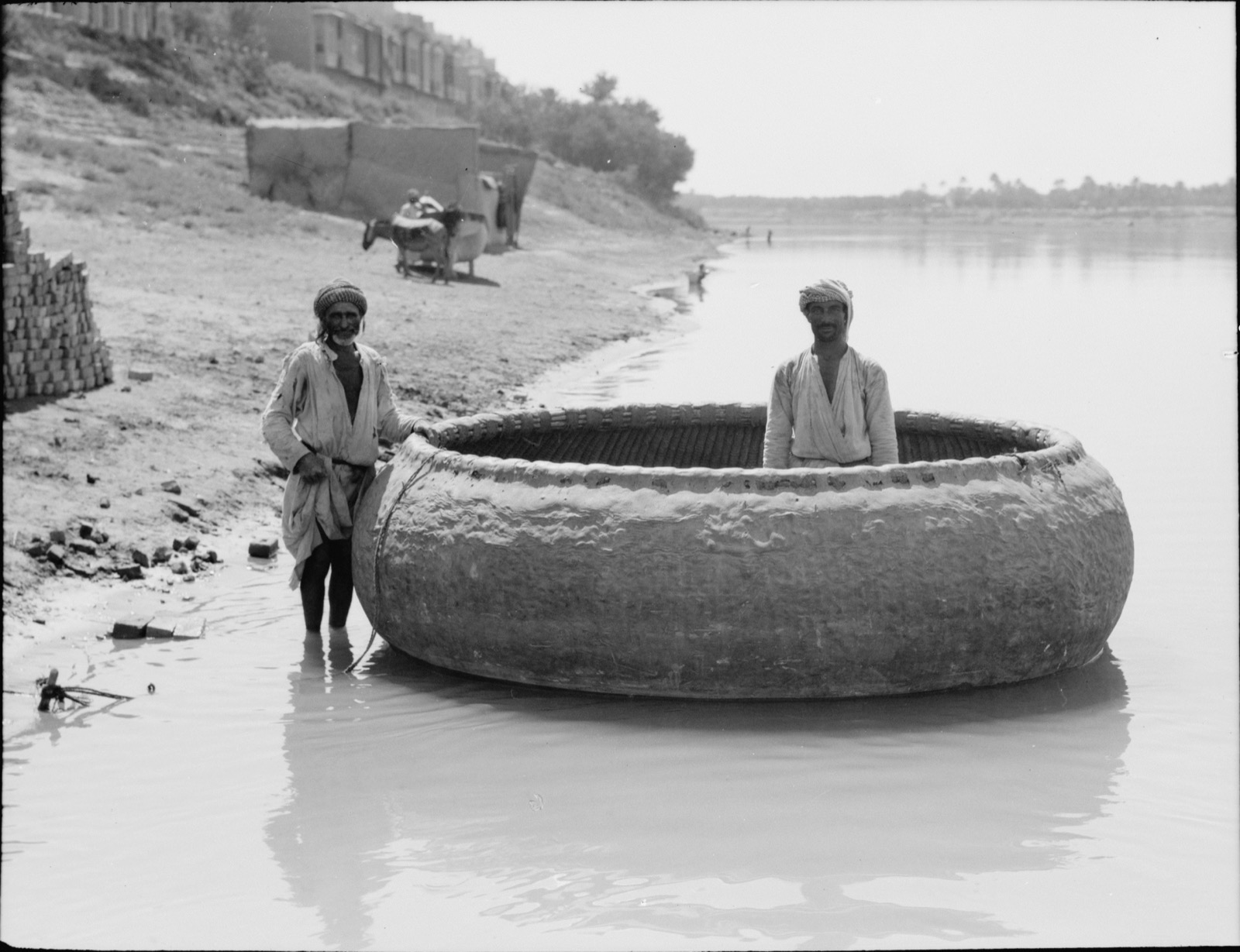
Archaeology · Boatbuilding MaterialsGenesis 6:14 says to cover the ark with pitch, inside and out. The Hebrew word there is kopher. In this meaning, a covering that keeps water out, Genesis 6:14 is the only place it turns up. But Akkadian, a language spoken next door, has a word that sounds almost the same. It is kupru, and it means bitumen: a natural black tar. It was the right stuff for the job. Boatbuilders on the Tigris and Euphrates sealed their boats with it for hundreds of years. Lumps of it still come out of the ground. Some have reed marks on one side and barnacles on the other.
The word
Say it
What it means
Where it is
kopher
KOH-fer
pitch, a covering that keeps water out
Genesis 6:14
kupru
KOO-proo
the everyday Mesopotamian word for bitumen
not in the Bible
Written the way the word sounds, not in its own alphabet — this is here to let you hear it, not to teach you to spell it.
Why this helps you read the BibleThis does not find the ark or date it. It shows one verse using the ordinary local word for the ordinary local method. Small accuracies like that are part of trusting the text as it stands.
A hull sealed with bitumen, still afloat in 1932
A guffa on the Tigris at Baghdad. The round hull is woven and then waterproofed with bitumen — the method the box describes, photographed while it was still in everyday use. This is not the ark and not an ancient boat: it is a 1932 photograph, and it shows only that the technique survived, not what Noah's vessel looked like. Genesis gives the ark a rectangle's three measurements and no hull shape at all.
Guffa on the Tigris, Baghdad, 1932. American Colony (Jerusalem) Photo Department; Library of Congress, Prints and Photographs Division, digital ID matpc.16021. Public domain. Source: Wikimedia Commons, File:Guffa on the Tigris, Baghdad, 1932.jpg.
Read Genesis 6–9 in your Bible first. Watch the water go up and then come down, and notice how differently the chapters spend their words on each half. Hold the general animal instruction in chapter 6 beside the more detailed one in chapter 7 — they are two instructions, not one. Track the time statements exactly as the text gives them: forty days of rain is not the same figure as a hundred and fifty days of prevailing water. Then follow the birds, and ask what each flight tells Noah that the one before it did not.
Original passage written for this workbook — not a quotation from Scripture.
1Stated in Genesis 6–9, or Not stated there? Tap each detail to send it left or right.💎 Uses the box aboveSort into two
◄ Stated in Genesis 6–9Not stated there ►
2Match each first detail with the detail paired with it.Match the Pairs
The raven→
The olive leaf→
The bow→
Pitch→
The cubit→
3Fill both blanks to complete the reasoning.Build the Argument
Genesis gives the ark's length, width and height all in cubits, so a reader can , which shows .
That is the whole workbook. The standardized test is optional and is scored separately.
Optional · The Beginning · Genesis 6–9
Standardized Test
Reading passage · A Flood Story on a Clay Tablet · Ancient Texts and Careful Comparison · ten questions in the shapes a standardized reading test uses: main idea, detail, vocabulary in context, inference, evidence, synthesis, insert text, prose summary and fill in a table.
Optional. This section is not counted in your workbook score. It gets a report card of its own, and skipping it still leaves your workbook complete.
Original passage written for this workbook — not a quotation from Scripture.
A Flood Story on a Clay Tablet
At the British Museum, a clay tablet from seventh-century BC Nineveh preserves part of the Epic of Gilgamesh. Its cuneiform writing uses wedge-shaped signs pressed into wet clay. The story on this tablet includes a flood survivor who reports a warning and the building of a boat. It also mentions family members, animals, birds, and a sacrifice offered once the boat comes to rest. Those details create real similarities with the Genesis flood account, while other details differ, including the gods, the reason given for the flood, and the shape of the boat. The object's date tells us when this surviving copy was made, not when the flood it describes occurred. Its existence alone cannot prove that Genesis borrowed from it, or that either account happened exactly as described. The tablet is evidence that a flood story was written down in ancient Mesopotamia. A careful comparison states that evidence, examines both the similarities and the differences, and leaves the larger conclusions qualified.
1What is the passage mostly about?Main Idea
2What material and writing system does the passage name?Detail
3In this passage, a “sacrifice” is ___.Vocabulary in Context
4What does the tablet's seventh-century BC date establish?Detail
5Why does the passage mention both similarities and differences?Author's Method
6Which statement is supported by the passage?Evidence
7Which method does the final sentence recommend?Synthesis
8Insert Text. Look at the four squares [1]–[4] in the passage below. They mark the places this sentence could be added: “Two limits follow from that.”
Those details create real similarities with the Genesis flood account, while other details differ, including the gods, the reason given for the flood, and the shape of the boat. [1] The object's date tells us when this surviving copy was made, not when the flood it describes occurred. [2] Its existence alone cannot prove that Genesis borrowed from it, or that either account happened exactly as described. [3] The tablet is evidence that a flood story was written down in ancient Mesopotamia. [4]
Where does the sentence fit best?Insert Text
9Prose Summary.The passage uses one museum object to model careful comparison. Six statements are listed below. Choose the THREE that best capture what the passage is saying. The other three do not belong — they are small details, or ideas the passage never puts forward. Each correct choice earns a mark of its own.Prose Summary
10Fill in a Table. Sort what this tablet is evidence of from what it cannot settle. Tap each statement to send it to the left column or the right one. Three belong in each.Fill in a Table
◄ The tablet is evidence of thisThe tablet cannot settle this ►
Independent study guide by Lokosmos Academy. Not affiliated with or endorsed by Crossway or any Bible publisher. Contains original retelling and analysis only; no Scripture text is reproduced in full. Reference edition: keyed to the ESV® Bible — read Genesis 6–9 in your own Bible alongside this workbook; any Bible works for reading, and the vocabulary and questions follow the ESV’s wording. No ESV® text is quoted in this workbook. ESV® and the English Standard Version® are registered trademarks of Crossway.
Lokosmos Academy is an independent study resource, not affiliated with or endorsed by Crossway or any Bible publisher. This workbook is keyed to the wording of the ESV® Bible; any Bible works for reading — the vocabulary and quiz answers simply follow the ESV’s wording. These workbooks reprint no text of the ESV® Bible; every passage summary, question and example sentence is original wording. ESV® and the English Standard Version® are registered trademarks of Crossway.