Where we left offThe flood is over, the bow has been set in the clouds, and Noah's three sons have families of their own.
A long list of families spreads out into lands and languages. Then the story stops and goes close in on one plain, one brickyard, and a sentence in which the builders say exactly what they are afraid of.
Why these chapters go togetherChapter 10 hands you the result — many nations, many languages — and chapter 11 hands you a scene about language. Reading either one without the other leaves half the picture.
What We Will Learn
Section
What you will practice
Word Study
Words for peoples, places and building: nation, Shinar, settle, brick, mortar, disperse, confuse
Bible Study
How to read a list that is not a story, and how to weigh a reason a character states out loud
Lokosmos Treasure Wisdom
Why Mesopotamia built in mud rather than stone, what a ziggurat actually was, and the languages of one ancient land
Chapter Summary
Ch.
What happens
10
The Families Spread Out — A long record traces the descendants of Noah's three sons, Shem, Ham and Japheth. It is not a story: it has no scenes and nobody speaks. Instead it groups people and closes each of the three branches with the same four-part note — clan by clan and land by land, each with its own language and nation. Cities and peoples of the ancient world are named along the way, including Babel among the first cities of Shinar.
11
One Language, One City — People with a single language settle on a plain in Shinar. They make bricks and bake them hard. Brick does the work of stone, and tar does the work of mortar. Then they decide to build a city with a tower, to make a name for themselves and to keep from being dispersed. The LORD confuses their language so they cannot understand each other, they stop building, and they are dispersed after all. The place is called Babel. A genealogy then runs from Shem to Abram.
Part 1 · The Beginning · Genesis 10–11
Word Study
Study 7 key words from Genesis 10–11, then answer each question.
🧱
💎 Lokosmos Treasure Wisdom · a true fact behind the storyA Country With Almost No Stone in It
Open your Bible atGenesis 11:3
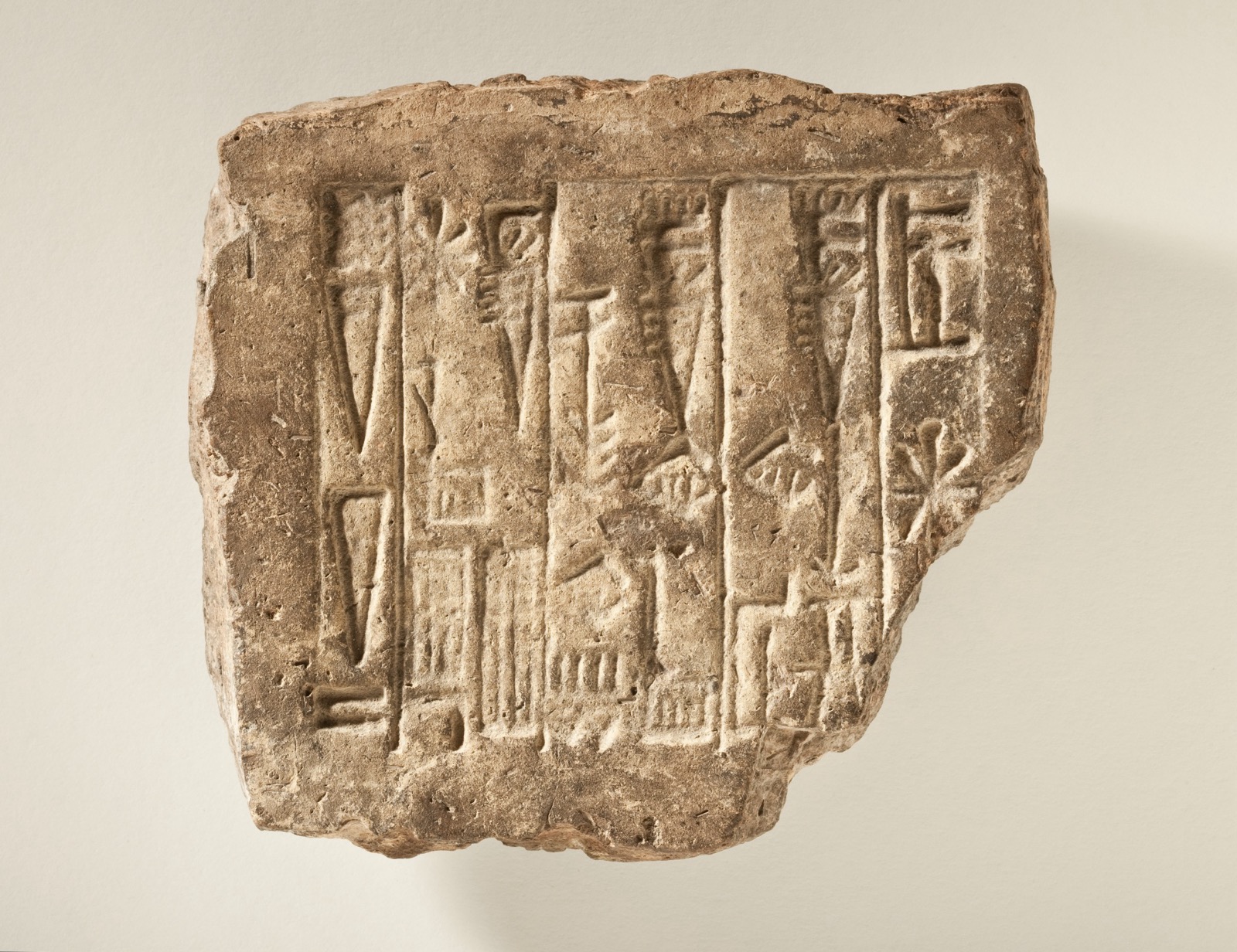
Word Study · Ancient Building MaterialsGenesis 11:3 reports a swap, twice over. The builders use brick where you would expect stone. They use tar where you would expect mortar. That is not a strange choice for that place. Southern Mesopotamia, the flat land this chapter calls Shinar, has almost no building stone in it. Egypt and Canaan have plenty; this plain does not. So its builders used what the rivers left them. They pressed wet clay into molds. Then they dried it in the sun or baked it hard in a kiln. For the sticky part they had bitumen, a black tar that seeps up by itself. Walls made this way still come out of the ground.
Why this helps you read the BibleA small detail can show that a story knows its own country. Ask of any passage: could this be done in the place it names? The Bible is set in real places, and the details hold.
One of the bricks, with the king's name stamped in it
Part of a clay brick made for Ur-Nammu, king of Ur, around 2100 BC, with a royal inscription stamped into the face. The right side has broken away; the museum catalogues the piece at about 14 cm across. This is the material Genesis 11 is talking about, from the region it places the builders in. It is not a brick from Babel: Genesis names no king and no date, and nothing connects this one to anything in the chapter.
Inscribed brick of King Ur-Nammu, Mesopotamia, c. 2112–2095 BC. Clay, catalogued at 14 cm wide. Los Angeles County Museum of Art, gift of Robert Blaugrund (M.80.196.66). Public domain. Source: Wikimedia Commons, File:Inscribed Brick of King Ur-Nammu LACMA M.80.196.66 (3 of 3).jpg.
⚖ Still argued aboutWhether the tower of Babel is a ziggurat. The architecture fits the description, but Genesis 11 never uses the word and no excavated ziggurat has been tied to this account.
🗣 Say itShinarSHY-nar(shī-när)BabelBAY-bul(bā-bəl)NimrodNIM-rod(nim-räd)PelegPEE-leg(pē-leg)JaphethJAY-feth(jā-fəth)zigguratZIG-uh-rat(zi-gə-rat)
nationn.Gen 10:5
A large group of people with its own land and language
“Genesis 10 groups families into nations, each with its own land.”
Shinarn.Gen 11:2
A flat region in southern Mesopotamia, in what is now Iraq
“Genesis 11 gives this name to the flat country where the people stop.”
settlev.Gen 11:2
To stop traveling and stay in one place
“They settle on the plain instead of moving on.”
brickn.Gen 11:3
A block of clay, shaped and then dried or baked hard
“Genesis 11 says the builders shaped these and baked them hard.”
mortarn.Gen 11:3
A material used to hold building blocks together
“Genesis 11 says tar did the job this usually does.”
dispersev.Gen 11:4, 8
To spread or scatter in different directions
“Genesis 11 says the builders wanted to avoid being scattered.”
confusev.Gen 11:7
To make something unclear or hard to understand
“Genesis 11 uses this word for what happens to their speech.”
ⓘ The vocabulary words in this list are selected to help you understand and complete this workbook. Some may not appear word-for-word in your Bible. The example sentences are our own wording, written to make the verse clearer — they are not quotations from it. Read each verse in your own Bible.
1A large group of people with its own land and language is a ___.Gen 10:5
2Southern Mesopotamia has almost no building stone, so brick was that region's ordinary building material.💎 Uses the box aboveGen 11:3
3Fill in each blank with the correct word.Gen 11:3
Word choices:brickmortarnationconfuse- some words will not be used
A block of clay, dried or baked hard, is a . Gen 11:3
The material that holds building blocks together is . Gen 11:3
4To spread or scatter in different directions is to ___.Gen 11:4, 8
5To ‘settle’ means to keep traveling from place to place.Gen 11:2
6To ‘confuse’ something is to make it unclear or hard to understand.Gen 11:7
7Fill in each blank with the correct word.Gen 10–11
Word choices:dispersesettleShinarbrick- some words will not be used
They stop traveling and on a plain. Gen 11:2
The land they settle in is called . Gen 11:2
Part 2 · The Beginning · Genesis 10–11
Understanding
Show you understood what happens in Genesis 10–11.
🧠
💎 Lokosmos Treasure Wisdom · a true fact behind the storyA List Is Not a Story, and Reads Differently
Open your Bible atGenesis 10:5, 10:20, 10:31
Close Reading · A List Is Not a StoryGenesis 10 has no scene in it. Nobody speaks. Nothing is decided. No single moment is chosen out of the rest. What it has instead is a shape. Read those three verses. You will find the same four-part note at the end of each of Noah's three sons: clans, languages, lands, nations. Read the chapter like a story and it feels like a long list of names. Read it as a list, and the repeated note becomes the point. Notice too that chapter 10 already has many languages in it, before chapter 11 tells you how that happened. A list shows what its maker thought was worth sorting.
Why this helps you read the BibleLists are not boring parts to skip. Ask what a list sorts people by, and you learn what mattered to the writer. Even a chapter of names is Scripture, and it is telling you something.
Three branches, and the same four-part close
Diagram of the chapter's own shape · the three branches and the repeated four-part note are Genesis 10:5, 20 and 31. The drawing does not show how many names each branch holds, and it makes no claim about which modern peoples any of them are.
Structure and formula: Genesis 10:5, 10:20, 10:31. Drawn for Lokosmos Academy.
1Genesis 10 has no scenes and nobody speaks in it. What is it doing instead?💎 Uses the box aboveGen 10:5, 20, 31
2What do the builders use in place of stone?Gen 11:3
3What reason do the builders give for building the city and the tower?Gen 11:4
4What happens to the building work in the end?Gen 11:8
5Write the numbers 1–5 in the boxes to show the correct order across Genesis 10–11. Number 1 = what happens first.Gen 10–11
Their language is confused, and they are dispersed.
The families of Noah's sons spread into lands and nations.
They make bricks and use bitumen for mortar.
People settle on a plain in Shinar.
They decide to build a city and a tower.
6The place where the building stops is given the name Babel.Gen 11:9
7Genesis 11 says the tower was finished before the people's language changed.Gen 11:8
Part 3 · The Beginning · Genesis 10–11
Literary Craft
Understanding HOW and WHY the story is told across Genesis 10–11.
📖
💎 Lokosmos Treasure Wisdom · a true fact behind the storyThey Say Out Loud What They Are Afraid Of
Open your Bible atGenesis 11:4, then Genesis 11:8
Literary Craft · MotiveA storyteller can tell you why somebody did something. Or the storyteller can stay quiet and let them say it themselves. Genesis 11:4 does the second one. The builders give their own reason, in their own words. That is called a stated motive, and it does a special job. A summary has already judged them for you. A quotation gives you the evidence and lets you judge. So read verse 4. Write down exactly what they say they want to avoid. Then read verse 8 and see what happens to them, four verses later.
Why this helps you read the BibleWhen people speak for themselves, you are trusted with the evidence. Compare what someone wants with what they get. Scripture often shows instead of telling, and reading it well means noticing that.
Motive
A reason a character states for what they want or decide to do. The builders in Shinar give their own reason out loud, and Genesis 11 quotes it instead of summarizing it.
Irony
When what happens is the opposite of what someone set out to achieve. The builders say they do not want to be dispersed, and by the end of the scene they are.
List
A record that sorts rather than narrates. Genesis 10 has no scenes and nobody speaks; it groups families by clan, language, land and nation.
1What is a motive?Gen 11:4
2Fill in each blank with the correct word.Gen 10–11
Word choices:listmotiveironymortar- some words will not be used
A record that sorts rather than narrates is a .
A stated reason for acting is a .
3Genesis 11 quotes the builders instead of summarizing them. What does quoting achieve?💎 Uses the box aboveGen 11:4
4The builders say they do not want to be dispersed, and by the end of the scene they are.Gen 11:4, 8
5Genesis 10 tells its material as a story, with scenes and conversation.Gen 10
6Fill in each blank with the correct word.Gen 11
Word choices:ironylistmotivenation- some words will not be used
When the outcome is the opposite of the aim, that is .
Genesis 10 is best read as a .
7What does the repeated four-part note at the end of each branch of Genesis 10 tell you?Gen 10:5, 20, 31
Part 4 · The Beginning · Genesis 10–11
Wisdom
Three deeper challenges — no single-word recall. Read, weigh the evidence, and reason it out.
🏛️
💎 Lokosmos Treasure Wisdom · a true fact behind the storyThe Towers Mesopotamia Actually Built
Open your Bible atGenesis 11:4
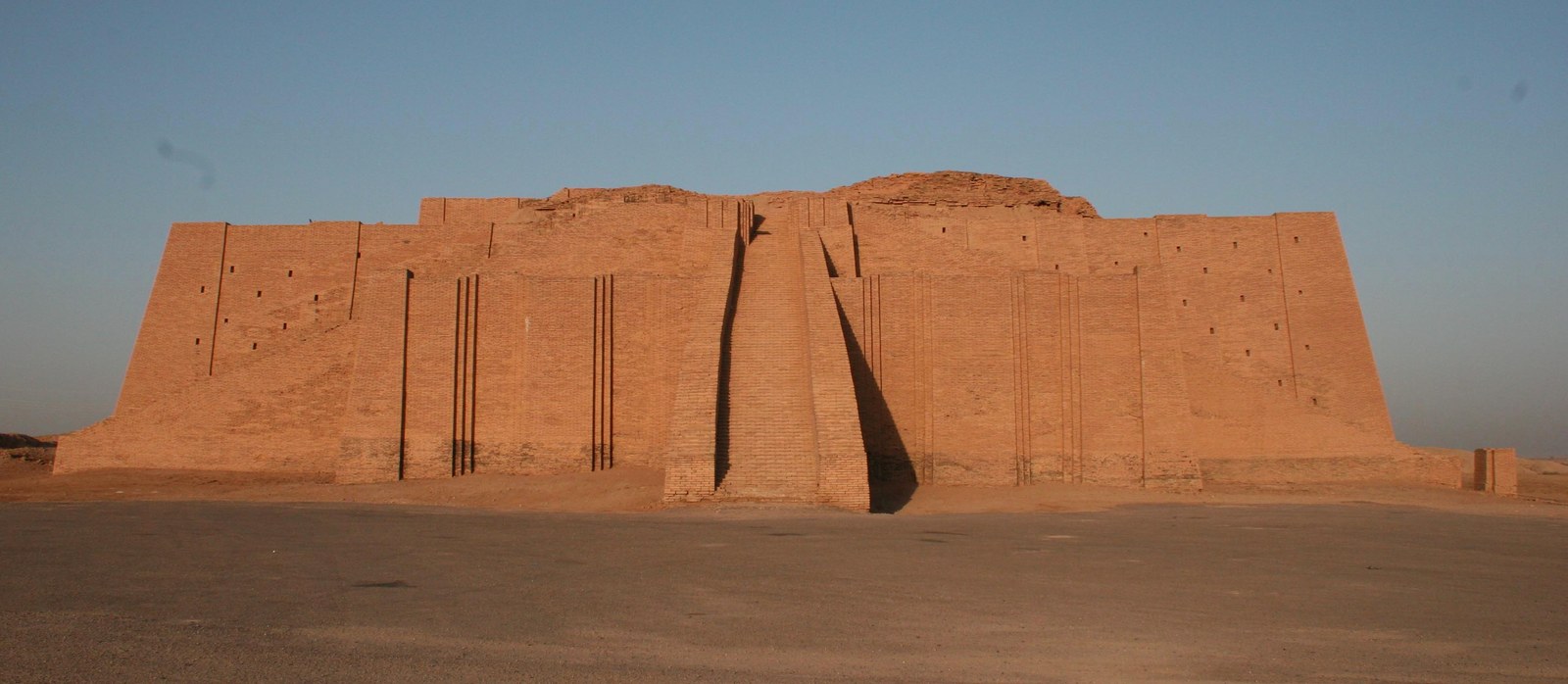
Buildings · Temples and TowersMesopotamia built its temples upward. A ziggurat was a solid stepped tower made of mudbrick. The core was dried in the sun. The outer skin was baked hard. A small shrine sat at the very top. Each one belonged to a single city and its god. None of them was a house or a fort. The best-known one still stands at Ur. It was begun about 2100 BC. Diggers cleared it in the 1920s. Only the base and the staircases are still there to be measured. Genesis 11 never once uses the word ziggurat.
The word
Say it
What it means
Where it is
ziggurat
ZIG-uh-rat
a stepped tower of mudbrick with a shrine on top
not in the Bible
Written the way the word sounds, not in its own alphabet — this is here to let you hear it, not to teach you to spell it.
Why this helps you read the BibleThe tower in Genesis 11 sounds like a ziggurat. The Bible never says it is one. Holding both at once is how you respect what Scripture says without adding to it.
The Great Ziggurat of Ur, as it stands
The lower stage of the Great Ziggurat of Ur and its triple staircase, restored in the twentieth century. This is exactly the part that still survives to be measured: the shrine that once stood on top is gone, and the upper stages are reconstruction or guesswork. Genesis 11 never names this building, and the photograph is not of Babel.
The Great Ziggurat of Ur, Iraq, photographed in 2006. Public domain. Source: Wikimedia Commons, File:Ziggarat of Ur 001.jpg.
Read Genesis 10–11 in your Bible first. Chapter 10 will feel like a wall of names; read it anyway, and watch for the same four-part note landing at the end of each of the three branches. Then slow right down for chapter 11. Notice the materials, notice that the builders are quoted rather than summarized, and notice exactly what they say they want to avoid. Keep the chapter's own words separate from anything you may have been told about where all the world's languages came from — Genesis 11 describes one place, and does not claim more.
Original passage written for this workbook — not a quotation from Scripture.
1Stated in Genesis 10–11, or Not stated there? Tap each detail to send it left or right.💎 Uses the box aboveSort into two
◄ Stated in Genesis 10–11Not stated there ►
2Match each first detail with the detail paired with it.Match the Pairs
Shinar→
Brick→
Bitumen→
Babel→
Genesis 10→
3Fill both blanks to complete the reasoning.Build the Argument
Genesis 11 quotes the builders' own words about why they are building, so a reader can , which shows .
That is the whole workbook. The standardized test is optional and is scored separately.
Optional · The Beginning · Genesis 10–11
Standardized Test
Reading passage · More Than One Language in One Ancient Land · Ancient Writing and Careful Evidence · ten questions in the shapes a standardized reading test uses: main idea, detail, vocabulary in context, inference, evidence, synthesis, insert text, prose summary and fill in a table.
Optional. This section is not counted in your workbook score. It gets a report card of its own, and skipping it still leaves your workbook complete.
Original passage written for this workbook — not a quotation from Scripture.
More Than One Language in One Ancient Land
Two different languages, Sumerian and Akkadian, were written in ancient Mesopotamia with the same wedge-shaped cuneiform signs. Sharing a script did not make them one language; their grammar was not the same. Trainee scribes worked from word lists that aligned a Sumerian word beside its Akkadian meaning, rather like a two-language dictionary pressed into clay. Those lists were copied and studied for roughly two thousand years, long after Sumerian had stopped being anyone's everyday speech. Meanwhile trade routes ran through the region, and a city on one of them heard travelers, traders and messengers from more than one nation in a single street. Thousands of these tablets have come out of the dry soil, and scholars spent well over a century learning to read a script that had been unreadable for centuries. One word list cannot show how every language on earth began. It can show, firmly, that two of them were in use side by side.
1What is the passage mostly about?Main Idea
2What did the trainee scribes' word lists do?Detail
3In this passage, a “nation” is ___.Vocabulary in Context
4For how long were the word lists copied and studied?Detail
5Why would a Mesopotamian city have heard more than one language?Inference
6What kind of evidence does the passage rely on?Evidence
7What does the passage say one word list can and cannot show?Synthesis
8Insert Text. Look at the four squares [1]–[4] in the passage below. They mark the places this sentence could be added: “A scribe had to learn both.”
Two different languages, Sumerian and Akkadian, were written in ancient Mesopotamia with the same wedge-shaped cuneiform signs. [1] Sharing a script did not make them one language; their grammar was not the same. [2] Trainee scribes worked from word lists that aligned a Sumerian word beside its Akkadian meaning, rather like a two-language dictionary pressed into clay. [3] Those lists were copied and studied for roughly two thousand years, long after Sumerian had stopped being anyone's everyday speech. [4]
Where does the sentence fit best?Insert Text
9Prose Summary.The passage shows how we know two languages were in use at once. Six statements are listed below. Choose the THREE that best capture what the passage is saying. The other three do not belong — they are small details, or ideas the passage never puts forward. Each correct choice earns a mark of its own.Prose Summary
10Fill in a Table. Sort what these word lists show from what they cannot show. Tap each statement to send it to the left column or the right one. Three belong in each.Fill in a Table
◄ The word lists show thisThe word lists cannot show this ►
Independent study guide by Lokosmos Academy. Not affiliated with or endorsed by Crossway or any Bible publisher. Contains original retelling and analysis only; no Scripture text is reproduced in full. Reference edition: keyed to the ESV® Bible — read Genesis 10–11 in your own Bible alongside this workbook; any Bible works for reading, and the vocabulary and questions follow the ESV’s wording. No ESV® text is quoted in this workbook. ESV® and the English Standard Version® are registered trademarks of Crossway.
Lokosmos Academy is an independent study resource, not affiliated with or endorsed by Crossway or any Bible publisher. This workbook is keyed to the wording of the ESV® Bible; any Bible works for reading — the vocabulary and quiz answers simply follow the ESV’s wording. These workbooks reprint no text of the ESV® Bible; every passage summary, question and example sentence is original wording. ESV® and the English Standard Version® are registered trademarks of Crossway.