Where we left offJacob has two wives, eleven sons and large flocks, and a father-in-law who has stopped looking at him kindly.
Jacob runs, and his father-in-law chases him for seven days. They pile up stones instead of fighting. Then, the night before he meets the brother he cheated, somebody wrestles him until sunrise.
Why these chapters go togetherGenesis 31 to 36 is one journey home, and it takes three meetings to finish: Laban behind him, a stranger in the dark, and Esau in front of him. Each one ends differently from how it starts.
What We Will Learn
Section
What you will practice
Word Study
Words for running, chasing and making peace: fled, pursued, witness, wrestled, prevailed, limped, bowed
Bible Study
How a writer holds a reader in suspense, and how a name marks what happened
Lokosmos Treasure Wisdom
Heaps of stones as legal witnesses, and the household figures archaeologists actually dig up
Chapter Summary
Ch.
What happens
31
The Flight, and a Heap of Stones — Jacob leaves without telling Laban, and Rachel takes her father's household gods. Laban pursues for seven days and catches them at Gilead. He searches for the figures and does not find them. The two men argue, then agree: they pile up stones, eat beside the heap, and make it a witness that neither will pass it to harm the other.
32
A Night by the Jabbok — Jacob hears Esau is coming with four hundred men. He divides his household, prays, and sends waves of animals ahead as a present. Left alone that night, a man wrestles him until daybreak, puts his hip out of joint, and gives him a new name, Israel. Jacob names the place Peniel, and goes on limping.
33
The Meeting — Esau arrives. Jacob bows to the ground seven times. Esau runs to him, embraces him, and they both weep. Esau does not want the gift and takes it only when pressed. The brothers part peacefully, and Jacob comes to Shechem and buys a piece of ground.
35–36
Bethel Again, and the Family Lists — God tells Jacob to go back to Bethel. He buries the foreign gods, builds an altar, and the name Israel is given him again. Rachel dies bearing Benjamin and is buried on the way. Isaac dies, and Esau and Jacob bury him together. Genesis 36 then lists Esau's descendants, and the book turns toward Joseph.
Part 1 · Isaac & Jacob · Genesis 31–36
Word Study
Study 7 key words from Genesis 31–36, then answer each question.
🪨
💎 Lokosmos Treasure Wisdom · a true fact behind the storyA Pile of Stones That Could Testify
Open your Bible atGenesis 31:44–52
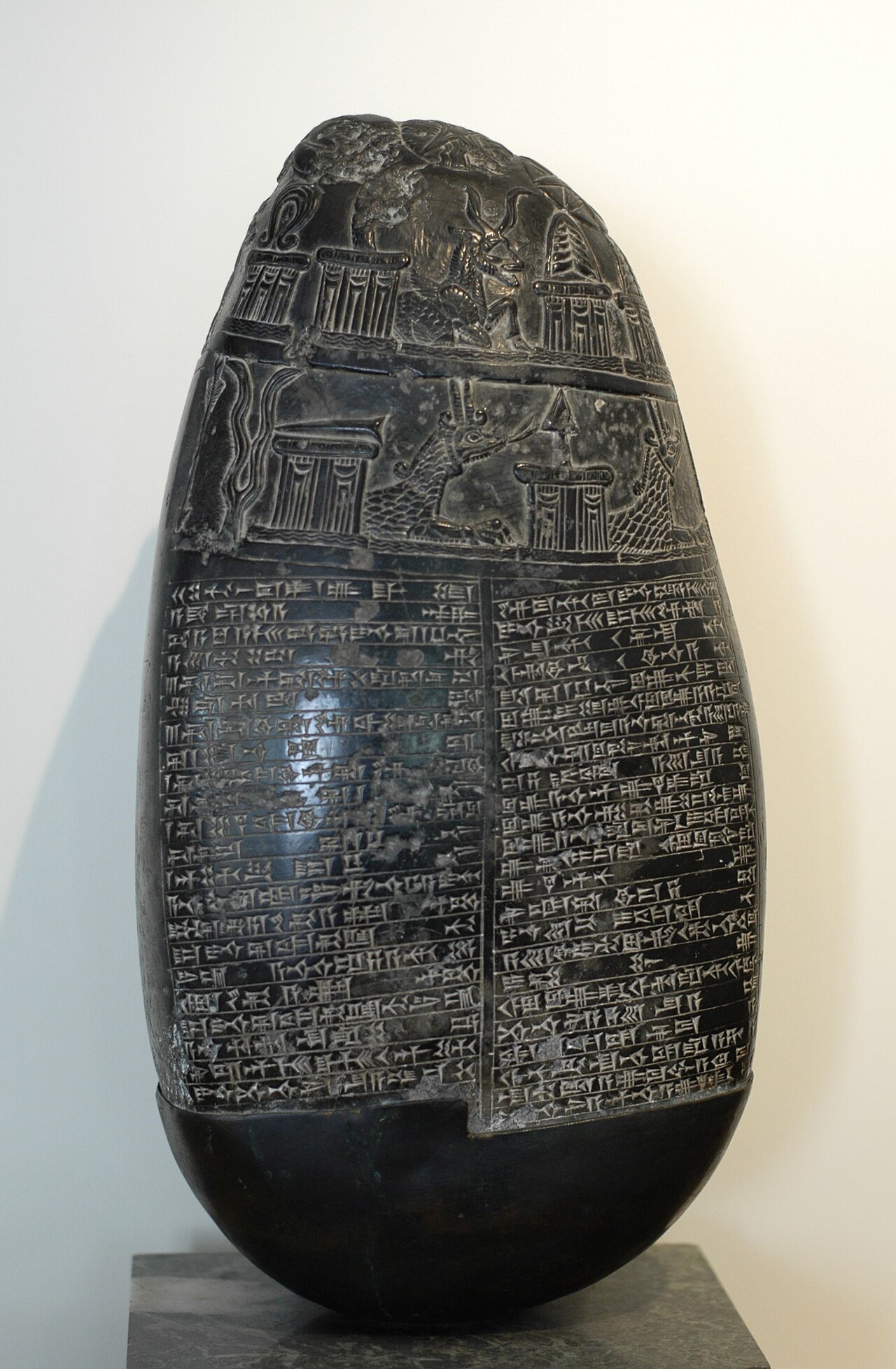
Word Study · Boundary MarkersJacob and Laban do not shake hands. They gather stones into a heap. They eat a meal beside it. Then they say what the heap is for. It will watch the border that neither man may cross to harm the other. That sounds odd until you know the custom. Across the region, heaps and standing stones marked agreed borders, and treaty texts lay curses on anyone who moves one. A stone cannot talk. But it can outlast both men, and stay exactly where it was put. That is the reason the two men in Genesis 31:48 give for calling theirs a witness.
Why this helps you read the BibleThe heap is doing a job, not decorating the scene. Know the job and you see that the two men just made a contract without paper.
An agreement cut into stone
A Babylonian boundary stone, carved with the terms of a land agreement and with divine symbols called down on anyone who moved it. That is a marker doing the job the box describes: standing still, in public, so nobody can claim later that the line was somewhere else. It comes from centuries after Jacob and Laban and is not their heap of stones.
The Michaux Stone, a Babylonian kudurru (boundary stone), c. 1099–1082 BC. Photograph by Marie-Lan Nguyen. Source: Wikimedia Commons. Public domain.
⚖ Still argued aboutWho wrestles Jacob. Genesis 32 says a man; Jacob names the place for having seen God; and Hosea 12:4 calls him an angel. The chapter itself never settles it.
🗣 Say itGileadGIL-ee-ad(gi-lē-əd)JabbokJAB-uk(ja-bək)Penielpeh-NEE-el(pe-nē-el)Mahanaimmay-huh-NAY-im(mā-hə-nā-im)IsraelIZ-ray-el(iz-rā-el)ShechemSHEK-em(she-kem)
fledv.Gen 31:21
Ran away
“Genesis 31 says Jacob left without warning and crossed the river.”
pursuedv.Gen 31:23
Chased after
“Genesis 31 says Laban came after him for a week.”
witnessn.Gen 31:48
Something or someone that can speak to what happened
“Genesis 31 gives the heap this job between the two men.”
wrestledv.Gen 32:24
Struggled hand to hand
“Genesis 32 has a man do this with Jacob until daybreak.”
prevailedv.Gen 32:28
Won, or held out
“Genesis 32 uses this word for how Jacob comes out of the struggle.”
limpedv.Gen 32:31
Walked unevenly because of an injury
“Genesis 32 says Jacob walked this way afterwards, because of his hip.”
bowedv.Gen 33:3
Bent low to show respect
“Genesis 33 has Jacob do this seven times on his way to Esau.”
ⓘ The vocabulary words in this list are selected to help you understand and complete this workbook. Some may not appear word-for-word in your Bible. The example sentences are our own wording, written to make the verse clearer — they are not quotations from it. Read each verse in your own Bible.
1The heap of stones is called a witness. What made a heap a good witness?💎 Uses the box aboveGen 31:48
2To have ‘fled’ is to have run away.Gen 31:21
3Fill in each blank with the correct word.Gen 31:23; 32:24
Word choices:pursuedwrestledbowedlimped- some words will not be used
Laban him for seven days. Gen 31:23
A man with Jacob until daybreak. Gen 32:24
4To have ‘prevailed’ is to have ___.Gen 32:28
5To have ‘bowed’ is to have bent low to show respect.Gen 33:3
6To have ‘limped’ is to have walked steadily and evenly.Gen 32:31
7Fill in each blank with the correct word.Gen 31:48; 33:3
Word choices:witnessbowedfledprevailed- some words will not be used
The heap of stones is made a between them. Gen 31:48
Jacob to the ground seven times. Gen 33:3
Part 2 · Isaac & Jacob · Genesis 31–36
Understanding
Show you understood what happens in Genesis 31–36.
🧠
💎 Lokosmos Treasure Wisdom · a true fact behind the storyWaiting for Something You Cannot Control
Open your Bible atGenesis 32:6–8, then 32:22–24
Close Reading · Building TensionWatch how slowly Genesis lets Jacob reach his brother. First the news: Esau is coming, and four hundred men are with him. Then Jacob splits his household in two, so that half might escape. Then he prays. Then he sends animals ahead in waves, each with a servant, each told what to say. Then he sends his family across the river. And only then, alone, in the dark, does the night begin. A writer who wants you to feel a wait makes you do the waiting, one step at a time.
Why this helps you read the BibleThe order of the verses is doing the work. Read them slowly and you feel the wait, instead of only knowing about it.
Three meetings, and how each one turns
Diagram of three stated meetings · how each begins and how each ends is reported in Genesis 31, 32 and 33. Setting them out in one shape is a way of reading them together. Genesis does not group them or say the three belong to one pattern.
Verses: Genesis 31:22–55, 32:22–32 and 33:1–11. Drawn for Lokosmos Academy.
1How long does Laban chase Jacob?Gen 31:23
2What do Jacob and Laban do instead of fighting?Gen 31:46–48
3What news reaches Jacob before the night by the river?Gen 32:6
4What happens when Esau finally arrives?Gen 33:4
5Write the numbers 1–5 in the boxes to show the correct order across Genesis 31–36. Number 1 = what happens first.💎 Uses the box aboveGen 31–36
Jacob returns to Bethel and builds an altar.
Esau arrives, and the brothers weep.
Jacob leaves without telling Laban.
Laban catches up, and they pile up stones.
A man wrestles Jacob until daybreak.
6Jacob is given a new name on the night by the river.Gen 32:28
7Genesis says plainly who the man was that wrestled Jacob.Gen 32:24–30
Part 3 · Isaac & Jacob · Genesis 31–36
Literary Craft
Understanding HOW and WHY the story is told across Genesis 31–36.
📖
💎 Lokosmos Treasure Wisdom · a true fact behind the storyA Struggle That Leaves Its Mark
Open your Bible atGenesis 32:28, then Genesis 32:30–31
Literary Craft · A Name and a ScarTwo things come out of that night, and Genesis reports them side by side. Jacob is given a new name. And he walks away limping. The place gets a name too, from what he says he has seen. Genesis explains none of it. It does not say who the man was. It does not say what the limp meant. It gives you a name, a place name and an injury, in three verses, and moves on. When a text says that much and no more, the silence is a choice. Reading it well means leaving it alone too.
Why this helps you read the BibleSome of the biggest scenes in Genesis explain the least. Notice what a passage will not say, and leave it there. That is part of reading it honestly.
Suspense
Holding a reader waiting for something they know is coming. Genesis puts five separate steps between the news about Esau and the meeting itself.
Significant naming
A name given out of what happened. Jacob is renamed after the struggle, and he names the place for what he says he saw.
Restraint
When a writer reports something remarkable and refuses to explain it. Genesis gives a name, a place name and an injury in three verses, and no comment.
1Genesis puts five steps between the news about Esau and the meeting. What is that called?Gen 32:6–24
2Fill in each blank with the correct word.Gen 32
Word choices:suspenserestraintnamingwitness- some words will not be used
Holding a reader waiting is .
Reporting something and refusing to explain it is .
3Genesis reports the new name, the place name and the limp, and explains none of them. What is that?💎 Uses the box aboveGen 32:28–31
4Jacob names the place after what he says he has seen.Gen 32:30
5A writer creates suspense by telling you the ending first.Gen 32
6Fill in each blank with the correct word.Gen 32:28–30
Word choices:namingsuspenserestraintlimped- some words will not be used
A name given out of what happened is significant .
Refusing to explain something remarkable is .
7Why does the number four hundred matter so much in Genesis 32?Gen 32:6
Part 4 · Isaac & Jacob · Genesis 31–36
Wisdom
Three deeper challenges — no single-word recall. Read, weigh the evidence, and reason it out.
🏹
💎 Lokosmos Treasure Wisdom · a true fact behind the storyThe Little Figures Rachel Took
Open your Bible atGenesis 31:19, then Genesis 31:34–35
Archaeology · Household FiguresRachel takes her father's household gods. Laban hunts through the camp for them. Small figures like these are dug up all over the ancient Near East. They turn up in ordinary houses, not only in temples. Most are small enough to sit in one hand. That is why the hiding place in this chapter works at all. Some scholars say holding them mattered for inheritance, and others say it did not. What the digging shows is smaller and surer. These things were common. They were household objects. And losing them was worth a seven-day chase.
Why this helps you read the BibleDigging can tell you what a thing was, and how common. Why one person wanted it is usually past what the objects can show.
Read Genesis 31 to 36 in your Bible. In chapter 31, find the heap of stones and write down exactly what the two men say it is for. In chapter 32, list every separate thing Jacob does between hearing the news and being left alone — you should find several, and the order is the point. Then read the night itself twice. The second time, notice how much the chapter does not tell you. Keep what it states apart from what you would like it to say.
Original passage written for this workbook — not a quotation from Scripture.
1Stated in Genesis 31–36, or Not stated there? Tap each detail to send it left or right.Sort into two
◄ Stated in Genesis 31–36Not stated there ►
2Match each first detail with the detail paired with it.💎 Uses the box aboveMatch the Pairs
Laban→
The heap of stones→
Four hundred men→
Peniel→
Esau→
3Fill both blanks to complete the reasoning.Build the Argument
Treaty texts from the region lay curses on anyone who moves a boundary marker, so Genesis 31 calling the heap a witness , which shows .
That is the whole workbook. The standardized test is optional and is scored separately.
Optional · Isaac & Jacob · Genesis 31–36
Standardized Test
Reading passage · Stones That Speak for an Agreement · Ancient Custom and Careful Evidence · ten questions in the shapes a standardized reading test uses: main idea, detail, vocabulary in context, inference, evidence, synthesis, insert text, prose summary and fill in a table.
Optional. This section is not counted in your workbook score. It gets a report card of its own, and skipping it still leaves your workbook complete.
Original passage written for this workbook — not a quotation from Scripture.
Stones That Speak for an Agreement
Two groups agree on a border. Neither can write, or neither trusts the other to keep a document. So they build something instead. Across the ancient Near East, heaps of stones and single upright stones were used to mark an agreed line, and treaty texts from the region lay curses on anyone who shifts one. Those curses are worth noticing for what they admit: nobody could post a guard on a boundary stone for a hundred years, so the text calls down something that does not get tired. Genesis 31 calls such a heap a witness, which is not asking it to speak but asking it to stay. A marker outlives the people who set it, does not move, and can be pointed at by anyone who comes later. That is the whole of its usefulness, and it is enough. What the archaeology cannot do is tell you which heap belonged to which agreement, or what any two men said over it. It shows the custom, plainly, and stops there.
1What is the passage mostly about?Main Idea
2What do treaty texts do about anyone who moves a marker?Detail
3In this passage, a “witness” is ___.Vocabulary in Context
4What does the passage say a marker does?Detail
5You can infer that moving a marker was treated as serious because ___.Inference
6What evidence does the passage rely on?Evidence
7What does the passage say archaeology cannot do?Synthesis
8Insert Text. Look at the four squares [1]–[4] in the passage below. They mark the places this sentence could be added: “Something that cannot be lost or forged.”
Two groups agree on a border. [1] Neither can write, or neither trusts the other to keep a document. [2] So they build something instead. [3] Across the ancient Near East, heaps of stones and single upright stones were used to mark an agreed line, and treaty texts from the region lay curses on anyone who shifts one. [4]
Where does the sentence fit best?Insert Text
9Prose Summary.The passage explains why a heap of stones could hold a border. Six statements are listed below. Choose the THREE that best capture what the passage is saying. The other three do not belong — they are small details, or ideas the passage never puts forward. Each correct choice earns a mark of its own.Prose Summary
10Fill in a Table. Sort what these stones settle from what they leave open. Tap each statement to send it to the left column or the right one. Three belong in each.Fill in a Table
◄ The stones show thisThe stones cannot show this ►
Independent study guide by Lokosmos Academy. Not affiliated with or endorsed by Crossway or any Bible publisher. Contains original retelling and analysis only; no Scripture text is reproduced in full. Reference edition: keyed to the ESV® Bible — read Genesis 31–36 in your own Bible alongside this workbook; any Bible works for reading, and the vocabulary and questions follow the ESV’s wording. No ESV® text is quoted in this workbook. ESV® and the English Standard Version® are registered trademarks of Crossway.
Lokosmos Academy is an independent study resource, not affiliated with or endorsed by Crossway or any Bible publisher. This workbook is keyed to the wording of the ESV® Bible; any Bible works for reading — the vocabulary and quiz answers simply follow the ESV’s wording. These workbooks reprint no text of the ESV® Bible; every passage summary, question and example sentence is original wording. ESV® and the English Standard Version® are registered trademarks of Crossway.