Where we left offJacob has come home, buried his father, and settled in the land where his own father had lived.
A boy tells his brothers two dreams in which they bow to him. Not long after, they throw him into a dry pit and sit down to eat.
Why these chapters go togetherGenesis 37 is one chapter and one movement: a favorite son, two dreams, and a plan that turns into a sale. Everything the rest of the book undoes begins here.
What We Will Learn
Section
What you will practice
Word Study
Words for family trouble and trade: robe, dreamed, conspired, pit, caravan, sold, mourned
Bible Study
How to track what each person knows, when the reader knows more than all of them
Lokosmos Treasure Wisdom
What a caravan actually carried, and what a slave cost in this period
Chapter Summary
Ch.
What happens
37
The Dreams, the Pit, the Sale — Jacob loves Joseph more than his other sons and gives him a special robe, and the brothers hate him for it. Joseph then tells two dreams in which sheaves and then stars bow down to him. Sent to check on his brothers at Dothan, he is seized and thrown into an empty pit. The brothers sit down to eat, see a caravan going down to Egypt, and sell him. They dip the robe in goat's blood, and Jacob mourns for his son.
Part 1 · Joseph · Genesis 37
Word Study
Study 7 key words from Genesis 37, then answer each question.
🏜
💎 Lokosmos Treasure Wisdom · a true fact behind the storyWhat a Caravan Was Really Carrying
Open your Bible atGenesis 37:25
Word Study · Ancient Trade GoodsGenesis names the cargo, and the list is worth a stop. The camels carry gum, balm and myrrh, going down to Egypt. Those are not food. They are dried tree resins, used for scent, for medicine and for preparing the dead. They were light, they did not spoil, and they were worth a great deal for their weight. That is exactly what you want on a long road. So this is a real trade route with a real cargo, and Egypt is where such goods were going. The chapter names all of it in one verse.
Why this helps you read the BibleGenesis puts a working trade route in one verse. Reading it slowly shows you the brothers are not inventing a way out. One arrives.
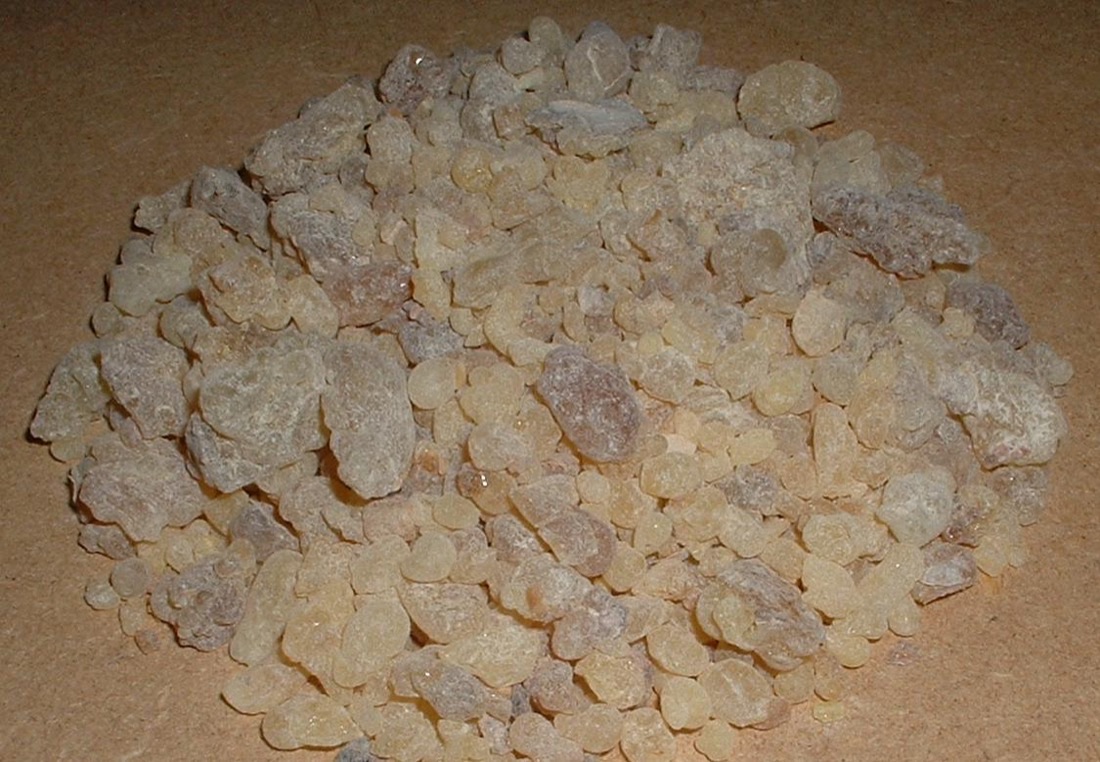
One of the things the caravan was carrying
Frankincense as it is traded: hardened lumps of tree resin, pale and brittle, about the size of small stones. Genesis 37:25 says the caravan was carrying gum, balm and resin, and this is what that kind of cargo actually looks like — light, dry, and worth a great deal for its weight. The photograph is modern, and this resin comes from Oman. It is the material, not the load the brothers watched go past.
Photograph of frankincense resin from Dhofar, Oman, by Gaius Cornelius. Source: Wikimedia Commons. Public domain.
⚖ Still argued aboutWhat the robe actually was. The Hebrew phrase is unusual and hard to pin down, and the familiar many colors reaches English through Greek and Latin rather than from the Hebrew itself.
🗣 Say itJosephJOH-zef(jō-zəf)ReubenROO-ben(rü-bən)JudahJOO-duh(jü-də)DothanDOH-than(dō-thən)IshmaeliteISH-may-el-ite(ish-mā-el-īt)MidianiteMID-ee-uh-nite(mi-dē-ə-nīt)
roben.Gen 37:3
A long piece of clothing worn over the body
“Genesis 37 has Jacob give Joseph one of these, and the brothers notice.”
dreamedv.Gen 37:5
Saw something while asleep
“Genesis 37 has Joseph do this twice, and tell his family both times.”
conspiredv.Gen 37:18
Planned something harmful together
“Genesis 37 uses this word for what the brothers do as he approaches.”
pitn.Gen 37:24
A deep hole in the ground
“Genesis 37 says the brothers put Joseph down one of these, and it was dry.”
caravann.Gen 37:25
A group of traders traveling together
“Genesis 37 brings one of these past, on the road toward Egypt.”
soldv.Gen 37:28
Handed over in exchange for payment
“Genesis 37 says Joseph was handed over for a price in silver.”
mournedv.Gen 37:34
Grieved for someone who has died
“Genesis 37 says Jacob did this for a long time, and would not stop.”
ⓘ The vocabulary words in this list are selected to help you understand and complete this workbook. Some may not appear word-for-word in your Bible. The example sentences are our own wording, written to make the verse clearer — they are not quotations from it. Read each verse in your own Bible.
1A long piece of clothing worn over the body is a ___.Gen 37:3
2To have ‘conspired’ is to have planned something harmful together.Gen 37:18
3Fill in each blank with the correct word.Gen 37:24, 34
Word choices:pitmournedrobesold- some words will not be used
They threw him into a with no water in it. Gen 37:24
Jacob for his son many days. Gen 37:34
4The caravan in Genesis 37 carries gum, balm and myrrh. What kind of goods are those?💎 Uses the box aboveGen 37:25
5To have ‘dreamed’ is to have seen something while asleep.Gen 37:5
6To have ‘sold’ something is to have given it away for nothing.Gen 37:28
7Fill in each blank with the correct word.Gen 37:5, 25
Word choices:dreamedcaravanconspiredpit- some words will not be used
A group of traders traveling together is a . Gen 37:25
Joseph , and told his brothers about it. Gen 37:5
Part 2 · Joseph · Genesis 37
Understanding
Show you understood what happens in Genesis 37.
🧠
💎 Lokosmos Treasure Wisdom · a true fact behind the storyYou Know More Than Any of Them
Open your Bible atGenesis 37:29–35
Close Reading · Tracking Who Knows WhatTry this with four columns: you, the brothers, Jacob, and Joseph. Now fill them in from the chapter. You know he is alive and sold. The brothers know it too. Reuben comes back to an empty pit, and he does not know what happened while he was away. Jacob knows only what a bloodied robe tells him. Joseph is on a road to Egypt, and he does not know what his father has been told. That is four pictures of one afternoon. You are the only one holding all four.
Why this helps you read the BibleKeep track of who knows what. It is one of the most useful habits in Bible reading. It stops you handing a character facts the text never gave them.
Who knows what, by the end of the chapter
Diagram of what the chapter reports · every line is stated or shown in Genesis 37, including Reuben returning to the empty pit. Sorting it by who knows what is a way of reading the chapter. Genesis never lists this, and the drawing does not say what anybody felt.
Verses: Genesis 37:23–35. Drawn for Lokosmos Academy.
1Why do the brothers hate Joseph at the start?Gen 37:3–4
2What bows down in the second dream?Gen 37:9
3What do the brothers do right after throwing Joseph into the pit?Gen 37:25
4What do the brothers bring back to Jacob?Gen 37:31–32
5Write the numbers 1–5 in the boxes to show the correct order across Genesis 37. Number 1 = what happens first.Gen 37
A caravan passes, and Joseph is sold.
Joseph tells two dreams in which others bow to him.
The robe is dipped in blood and shown to Jacob.
The brothers seize him and throw him into a pit.
Jacob gives Joseph a robe, and the brothers hate him.
6Reuben comes back and finds the pit empty.💎 Uses the box aboveGen 37:29
7The brothers tell Jacob in plain words that Joseph is dead.Gen 37:32
Part 3 · Joseph · Genesis 37
Literary Craft
Understanding HOW and WHY the story is told across Genesis 37.
📖
💎 Lokosmos Treasure Wisdom · a true fact behind the storyA Dream That Comes True Much Later
Open your Bible atGenesis 37:5–11
Literary Craft · ForeshadowingJoseph has two dreams and tells them both. Sheaves bow. Then the sun and moon and eleven stars bow. His brothers hate him for it, and even his father asks whether the family is meant to come and bow down. Nothing bows in this chapter. That is the point. When a story plants something early that only pays off much later, writers call it foreshadowing. Genesis puts the dreams at the front and then makes you wait five chapters before anyone bows. Hold on to them, and read for the moment they come back.
Why this helps you read the BibleGenesis plants things and waits. Marking them as you read is how you catch the payoff chapters later, instead of missing it.
Foreshadowing
Something planted early that pays off much later. Joseph's two dreams are told in chapter 37. His brothers first bow to him in chapter 42, and all eleven bow in chapter 44.
Dramatic irony
When the reader knows something a character does not. You watch the sale; Jacob only sees a bloodied robe.
Symbol
A visible thing that carries a bigger meaning. The robe stands for the father's favour, and it is the robe that is sent back.
1The dreams are told in chapter 37, and nobody bows to Joseph until chapter 42. What is that?💎 Uses the box aboveGen 37:5–11
2Fill in each blank with the correct word.Gen 37
Word choices:foreshadowingsymbolironycaravan- some words will not be used
Something planted early that pays off later is .
A visible thing carrying a bigger meaning is a .
3Why is the robe a good symbol in this chapter?Gen 37:3, 31–33
4You know Joseph is alive while Jacob believes he is dead.Gen 37:28–35
5Foreshadowing means telling the reader exactly how a story will end.Gen 37
6Fill in each blank with the correct word.Gen 37:28–35
Word choices:ironyforeshadowingsymbolrobe- some words will not be used
Knowing what a character does not is dramatic .
The dreams planted early are .
7The brothers show Jacob the robe and ask him to identify it. Why does that matter?Gen 37:32
Part 4 · Joseph · Genesis 37
Wisdom
Three deeper challenges — no single-word recall. Read, weigh the evidence, and reason it out.
💰
💎 Lokosmos Treasure Wisdom · a true fact behind the storyTwenty Shekels of Silver
Open your Bible atGenesis 37:28
Ancient Economy · What a Price Tells YouThe chapter gives the price: twenty shekels of silver. That number can be checked. Old Babylonian legal papers put a slave's price at about twenty shekels. Those come from the earlier second millennium BC. Later records from other places often give higher figures. But the prices vary a lot with who was sold, and where. So the number in Genesis 37 sits among the earliest of them. Fitting is not the same as proving. What the verse says plainly is that a brother was given a price, and his brothers took it.
Why this helps you read the BibleA price is evidence you can check. Notice when a text gives you a number, because a number can be tested and a feeling cannot.
Read Genesis 37 in your Bible, all of it, twice. The first time, just read. The second time, take four columns: you, the brothers, Jacob, Joseph. Every few verses, write down what each one knows at that moment. Watch Reuben in particular, and notice where he is when the sale happens. Then look hard at verse 32 and ask what the brothers actually say, and what they let Jacob say instead. Keep what the chapter states apart from what you might guess: it never tells you what Joseph was thinking in the pit.
Original passage written for this workbook — not a quotation from Scripture.
1Stated in Genesis 37, or Not stated there? Tap each detail to send it left or right.Sort into two
◄ Stated in Genesis 37Not stated there ►
2Match each first detail with the detail paired with it.💎 Uses the box aboveMatch the Pairs
The robe→
The two dreams→
The pit→
The caravan→
Twenty pieces of silver→
3Fill both blanks to complete the reasoning.Build the Argument
Legal texts put a slave's price near twenty shekels in the earlier second millennium BC, so the figure in Genesis 37 , which shows .
That is the whole workbook. The standardized test is optional and is scored separately.
Optional · Joseph · Genesis 37
Standardized Test
Reading passage · What a Caravan Carried · Ancient Trade and Careful Evidence · ten questions in the shapes a standardized reading test uses: main idea, detail, vocabulary in context, inference, evidence, synthesis, insert text, prose summary and fill in a table.
Optional. This section is not counted in your workbook score. It gets a report card of its own, and skipping it still leaves your workbook complete.
Original passage written for this workbook — not a quotation from Scripture.
What a Caravan Carried
A caravan crossing hundreds of miles could not carry just anything. Every load had to earn its place on an animal's back. So the goods that moved longest distances shared three things: they were light, they lasted, and they were worth a great deal for their weight. Gum and resins fit all three. They are dried sap, they do not rot, and they were wanted for scent, for medicine and for preparing bodies for burial. Egypt in particular bought them steadily, because Egyptian burial used them in quantity. Grain, by contrast, moved by river and by sea, because carrying it far overland consumed more than it delivered. This is why an ancient trade list is useful evidence. It cannot tell you who traveled on any one day. It tells you which roads were worth taking at all, and what was on them.
1What is the passage mostly about?Main Idea
2What three things did long-distance goods share?Detail
3In this passage, a “caravan” is ___.Vocabulary in Context
4Why did Egypt buy resins steadily?Detail
5You can infer that grain traveled ___.Inference
6What kind of evidence is an ancient trade list?Evidence
7What does the passage say a trade list cannot tell you?Synthesis
8Insert Text. Look at the four squares [1]–[4] in the passage below. They mark the places this sentence could be added: “Not everything did.”
Gum and resins fit all three. [1] They are dried sap, they do not rot, and they were wanted for scent, for medicine and for preparing bodies for burial. [2] Egypt in particular bought them steadily, because Egyptian burial used them in quantity. [3] Grain, by contrast, moved by river and by sea, because carrying it far overland consumed more than it delivered. [4]
Where does the sentence fit best?Insert Text
9Prose Summary.The passage explains what moved along a long trade road, and why. Six statements are listed below. Choose the THREE that best capture what the passage is saying. The other three do not belong — they are small details, or ideas the passage never puts forward. Each correct choice earns a mark of its own.Prose Summary
10Fill in a Table. Sort what an ancient trade list settles from what it leaves open. Tap each statement to send it to the left column or the right one. Three belong in each.Fill in a Table
◄ A trade list shows thisA trade list cannot show this ►
Independent study guide by Lokosmos Academy. Not affiliated with or endorsed by Crossway or any Bible publisher. Contains original retelling and analysis only; no Scripture text is reproduced in full. Reference edition: keyed to the ESV® Bible — read Genesis 37 in your own Bible alongside this workbook; any Bible works for reading, and the vocabulary and questions follow the ESV’s wording. No ESV® text is quoted in this workbook. ESV® and the English Standard Version® are registered trademarks of Crossway.
Lokosmos Academy is an independent study resource, not affiliated with or endorsed by Crossway or any Bible publisher. This workbook is keyed to the wording of the ESV® Bible; any Bible works for reading — the vocabulary and quiz answers simply follow the ESV’s wording. These workbooks reprint no text of the ESV® Bible; every passage summary, question and example sentence is original wording. ESV® and the English Standard Version® are registered trademarks of Crossway.