for The Coming of Jesus · Part 2 · Matthew 1–2; Luke 1–2
Mary, Joseph & the Birth of Jesus
4 Parts40 min
What Happens in Part 2
Where we left offGabriel has told Mary she will have a son, and she has come home from three months with Elizabeth in the hill country.
Joseph learns Mary is expecting a child and decides quietly to end the engagement, until a dream stops him. A decree from Rome sends the two of them to Bethlehem to be registered. The baby is born, laid in a feeding trough, and shepherds arrive because angels told them to.
Why these chapters go togetherTwo writers cover this birth and they choose almost entirely different material. Reading them together is not about merging them into one story. It is about seeing what each one decided mattered.
What We Will Learn
Section
What you will practice
Word Study
Words for engagement, empire and birth: betrothed, decree, registered, manger, inn, swaddling, shepherds
Bible Study
How to read two accounts of one event without flattening them
Lokosmos Treasure Wisdom
Why one Greek word behind 'inn' can be read two ways, and how Roman counting worked
Chapter Summary
Ch.
What happens
Matthew 1–2
A Dream, and Then Danger — Matthew opens with a list of ancestors running down to Joseph. Mary is found to be expecting a child, and Joseph, unwilling to shame her, plans to divorce her quietly. An angel tells him in a dream to take her as his wife and to name the boy Jesus. Wise men from the east follow a star to Jerusalem, ask Herod where the king is to be born, and are sent on to Bethlehem. Warned in a dream, they go home another way. Joseph is warned too, and the family leaves for Egypt.
Luke 2
A Decree, and Then Shepherds — A registration ordered from Rome takes Joseph from Nazareth to Bethlehem because of his family line. Mary gives birth there, and Luke names a manger and an inn in the same breath. Shepherds in the fields nearby hear the news from an angel and go to see for themselves. When the days of purification are complete, the family brings the baby to the temple in Jerusalem. There an old man named Simeon and a prophetess named Anna each recognize who this child is.
Part 1 · The Coming of Jesus · Matthew 1–2; Luke 1–2
Word Study
Study 7 key words from Matthew 1–2; Luke 1–2, then answer each question.
🏠
💎 Lokosmos Treasure Wisdom · a true fact behind the storyOne Word, Two Pictures
Open your Bible atLuke 2:7
Word Study · One Word, Two HomesEnglish Bibles say there was no place in the inn. The Greek word behind it is kataluma. Luke uses that same word later for the upstairs room where Jesus eats the last supper. In the story of the good Samaritan he means a real roadside inn. There he uses a different word altogether. So many scholars read Luke 2:7 as a guest room that was full. Others keep the older reading. Luke does not describe a building or a room, and neither does this box. The word will not settle the picture by itself.
Why this helps you read the BibleOne Greek word can carry more than one English picture. Knowing that keeps you from arguing over a detail the Bible never fixes. It teaches a habit too. Check how a writer uses a word somewhere else.
⚖ Still argued aboutWhen Luke's registration happened. He ties it to Quirinius, whose governorship is dated to AD 6, while both Gospels set these events in the days of Herod, who died about 4 BC. Your Bible may carry a footnote at Luke 2:2 offering a second way to read the verse. Several solutions have been proposed and none has settled it.
🗣 Say itBethlehemBETH-lih-hem(beth-li-hem)Augustusaw-GUS-tus(ȯ-gəs-təs)Quiriniuskwih-RIN-ee-us(kwi-ri-nē-əs)NazarethNAZ-uh-reth(na-zə-rəth)HerodHAIR-ud(her-əd)swaddlingSWOD-ling(swä-də-liŋ)
betrothedadj.Matt 1:18
Promised in marriage, but not yet living together
“Matthew 1 uses this word for where Mary and Joseph stood before marrying.”
decreen.Luke 2:1
An official order given by a ruler
“Luke 2 says the order for the count came from the emperor himself.”
registeredv.Luke 2:3
Written down on an official list
“Luke 2 says people had to be written down, each in his own town.”
mangern.Luke 2:7
A box or trough that animals feed from
“Luke 2 says the only bed named for the child is a feeding trough.”
innn.Luke 2:7
A place where travelers can stay
“Luke 2 gives one reason for the trough, and it concerns the inn.”
swaddlingadj.Luke 2:7
Wrapped snugly in strips of cloth
“Luke 2 uses this word for how the baby was wrapped.”
shepherdsn.Luke 2:8
People who look after sheep
“Luke 2 places these men outdoors with their flock, at night.”
ⓘ The vocabulary words in this list are selected to help you understand and complete this workbook. Some may not appear word-for-word in your Bible. The example sentences are our own wording, written to make the verse clearer — they are not quotations from it. Read each verse in your own Bible.
1An official order given by a ruler is a ___.Luke 2:1
2To be ‘betrothed’ is to be promised in marriage.Matt 1:18
3Fill in each blank with the correct word.Luke 2:3, 2:7
Word choices:registeredmangerdecreeinn- some words will not be used
Everyone went to his own town to be . Luke 2:3
She laid him in a , and wrapped him in cloths. Luke 2:7
4What is a ‘manger’?Luke 2:7
5‘Swaddling’ means wrapped snugly in strips of cloth.💎 Uses the box aboveLuke 2:7
6‘Shepherds’ are people who look after sheep.Luke 2:8
7Fill in each blank with the correct word.Luke 2:1, 2:7
Word choices:decreeinnshepherdsbetrothed- some words will not be used
A went out from Caesar Augustus. Luke 2:1
Luke gives one reason for the manger: no room left in the . Luke 2:7
Part 2 · The Coming of Jesus · Matthew 1–2; Luke 1–2
Understanding
Show you understood what happens in Matthew 1–2; Luke 1–2.
📑
💎 Lokosmos Treasure Wisdom · a true fact behind the storyTwo Beginnings, Two Angles
Open your Bible atMatthew 1:18–2:15, then Luke 2:1–20
Close Reading · Comparing Two AccountsMatthew and Luke both tell of the birth. They do not tell the same parts. Matthew has a dream, wise men from the east, Herod, and a flight into Egypt. Luke has a census, shepherds, angels and a manger. Very little sits in both: the parents' names, Bethlehem, Nazareth, and the name Jesus. That is worth noticing rather than smoothing over. Two writers chose different material about one event. That is what happens whenever two people report the same day. Read each one for what it actually says before you ask how they fit together.
Why this helps you read the BibleThe Bible gives four accounts of Jesus, not one blended one. Read each writer for what he chose. That is how you hear what he was telling you, instead of a story none of them wrote.
What each writer chose to tell
Diagram of stated content · every item is reported in Matthew 1–2 or Luke 2. Sorting them into three columns is a way of comparing the two accounts. Neither writer sets his material out this way, and neither says what the other left out.
Verses: Matthew 1:18–25, 2:1–15; Luke 2:1–20. Drawn for Lokosmos Academy.
1What does Joseph plan to do before the dream?💎 Uses the box aboveMatt 1:19
2Why do Joseph and Mary go to Bethlehem?Luke 2:4
3Who tells the shepherds what has happened?Luke 2:9–11
4Where do the wise men go first?Matt 2:1–2
5Write the numbers 1–5 in the boxes to show the correct order across Matthew Chapters 1–2 and Luke Chapter 2. Number 1 = what happens first.Matt 1–2; Luke 2
The shepherds go back glorifying God.
The shepherds are told where to look.
The shepherds find Mary, Joseph and the child.
An angel appears to shepherds in the field.
A great company of angels appears with him.
6Matthew's account includes the shepherds in the fields.Matt 1–2
7Both Matthew and Luke place the birth in Bethlehem.Matt 2:1; Luke 2:4
Part 3 · The Coming of Jesus · Matthew 1–2; Luke 1–2
Literary Craft
Understanding HOW and WHY the story is told across Matthew 1–2; Luke 1–2.
📜
💎 Lokosmos Treasure Wisdom · a true fact behind the storyThe Word Standing Over Matthew's First Line
Open your Bible atMatthew 1:1
Literary Craft · A Greek TitleOpen Matthew in Greek and the first two words are biblos geneseos. Translators usually give that as the book of the genealogy. But the second word is the one the old Greek Bible used as the title for Genesis. It also heads the family lists inside that book. So the same Greek heading stands over Matthew's first line and over the Bible's first book. The word carries two senses at once. Something is starting, and a family line is about to be traced. English translations have to pick one. The Greek word holds both.
Why this helps you read the BibleA first line can be a signpost. Look up how a word is used elsewhere. Here it shows a heading Matthew shares with the Bible's own first book.
Allusion
A short pointer back to another text, meant to be recognized. Matthew's Greek opening points back at the book of Genesis.
Selection
What a writer chooses to include and leave out. Matthew and Luke tell one birth and overlap in very little of it.
Framing
The setting a writer puts a scene inside. Luke frames the birth with an emperor's decree; Matthew frames it with a king's fear.
1Matthew opens with a Greek phrase that points back to another book. Which one?💎 Uses the box aboveMatt 1:1
2Fill in each blank with the correct word.Matt 1–2; Luke 2
Word choices:allusionselectiondecreeframing- some words will not be used
A short pointer back to another text is an .
What a writer chooses to include or leave out is .
3Luke frames the birth with an emperor's decree. What does Matthew frame it with?Matt 2:1–16
4Bethlehem appears in both Matthew's account and Luke's.Matt 2:1; Luke 2:4
5An allusion works only if the reader does not recognize it.Matt 1:1
6Fill in each blank with the correct word.Luke 2:1; Matt 2:3
Word choices:framingallusionmangerselection- some words will not be used
The setting a writer puts a scene inside is its .
A pointer back to another text is an .
7Why is it worth noticing what each writer left out?Matt 1–2; Luke 2
Part 4 · The Coming of Jesus · Matthew 1–2; Luke 1–2
Wisdom
Three deeper challenges — no single-word recall. Read, weigh the evidence, and reason it out.
📜
💎 Lokosmos Treasure Wisdom · a true fact behind the storyRome Counted People
Open your Bible atLuke 2:1–3
History & Empires · The CensusLuke says an order went out for the whole empire to be counted. Counting people was a real Roman habit. Census papers survive from Roman Egypt. There a household count was taken every fourteen years. Egypt is where the paperwork survives, and how closely Judea matched it is not known. The point of counting was taxes. So the machinery Luke describes is documented. What is argued about is the date. Luke ties his census to Quirinius, and those years do not line up easily with Herod. That problem is real, and it is not settled.
Why this helps you read the BibleSay what the evidence covers, and say where it stops. The practice is well documented. The date is truly disputed. Holding both at once is what honest Bible reading looks like.
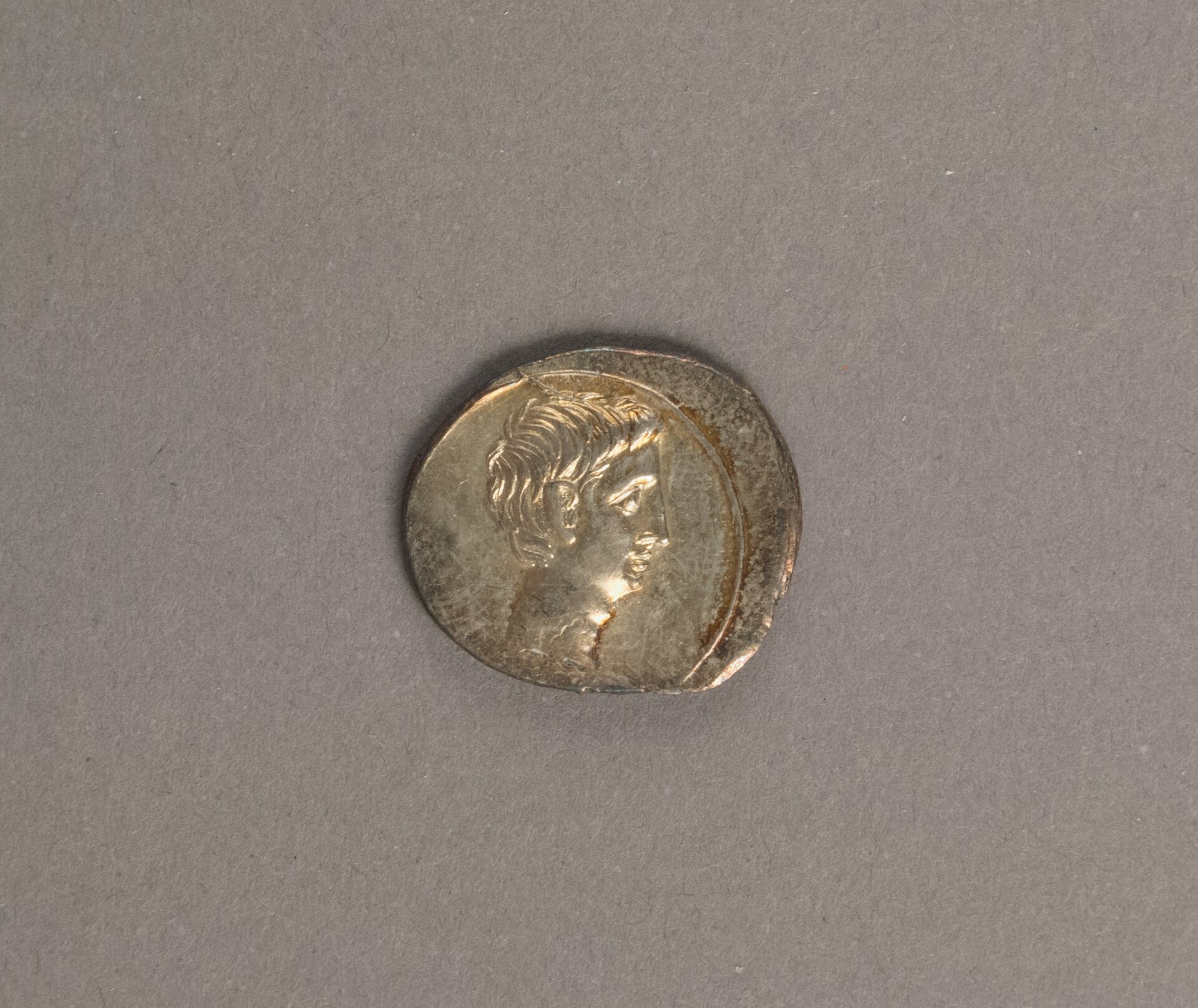
The head the decree traveled on
A silver denarius of Octavian, later called Augustus, struck about 29–27 BC. Coins like this carried the emperor's face into every province, and paying taxes in them is the reason counting people mattered. This coin was struck years before the registration Luke describes, and it has no connection to it. It shows who the decree in Luke 2:1 came from, not the decree.
Silver denarius of Octavian, ca. 29–27 BC. The Metropolitan Museum of Art. Source: Wikimedia Commons, File:Silver denarius of Octavian (Augustus) MET LC-08 170 89b.jpg. CC0 public domain dedication.
Read Matthew 1:18–2:15 and Luke 2:1–20 in your Bible. Draw three columns: Matthew only, in both, Luke only. Put every event you meet into one of them. Then look at how narrow the middle column is. Keep what the accounts state apart from what you might add: neither writer says why he left the other's material out.
Original passage written for this workbook — not a quotation from Scripture.
1Stated in these chapters, or Not stated there? Tap each detail to send it left or right.Sort into two
◄ Stated in these chaptersNot stated there ►
2Match each first detail with the detail paired with it.Match the Pairs
Caesar Augustus→
Bethlehem→
The manger→
The shepherds→
The wise men→
3Fill both blanks to complete the reasoning.💎 Uses the box aboveBuild the Argument
Census documents survive from Roman Egypt showing households counted on a regular cycle, so Luke describing a registration , which shows .
That is the whole workbook. The standardized test is optional and is scored separately.
Optional · The Coming of Jesus · Matthew 1–2; Luke 1–2
Standardized Test
Reading passage · Counting an Empire · Roman Government and Careful Evidence · ten questions in the shapes a standardized reading test uses: main idea, detail, vocabulary in context, inference, evidence, synthesis, insert text, prose summary and fill in a table.
Optional. This section is not counted in your workbook score. It gets a report card of its own, and skipping it still leaves your workbook complete.
Original passage written for this workbook — not a quotation from Scripture.
Counting an Empire
An empire that wants to tax people first has to know how many there are. Rome did, and some of the paperwork survives. From Roman Egypt we have household returns written on papyrus, in which a head of house lists everyone living under his roof, with ages and relationships. In Egypt those returns show a count taken on a fourteen-year cycle, and they show people being registered at their own home rather than wherever they happened to be standing. That is administration, not ceremony: the lists fed the tax rolls. A decree from the emperor could set such a count in motion across a province. What the surviving papers cannot do is date an event they never mention, or prove that any one family made any one journey. They show the machine running, and roughly how it ran.
1What is the passage mostly about?Main Idea
2What do the household returns list?Detail
3In this passage, to be “registered” is to be ___.Vocabulary in Context
4How often was the count taken in Roman Egypt?Detail
5You can infer that people were counted where they belonged because ___.Inference
6Which detail best supports the idea that this was ordinary administration?Evidence
7What does the passage say the surviving papers cannot do?Synthesis
8Insert Text. Look at the four squares [1]–[4] in the passage below. They mark the places this sentence could be added: “The paperwork is the proof.”
An empire that wants to tax people first has to know how many there are. [1] Rome did, and some of the paperwork survives. [2] From Roman Egypt we have household returns written on papyrus, in which a head of house lists everyone living under his roof, with ages and relationships. [3] In Egypt those returns show a count taken on a fourteen-year cycle, and they show people being registered at their own home rather than wherever they happened to be standing. [4]
Where does the sentence fit best?Insert Text
9Prose Summary.The passage explains how Rome counted the people it taxed. Six statements are listed below. Choose the THREE that best capture what the passage is saying. The other three do not belong — they are small details, or ideas the passage never puts forward. Each correct choice earns a mark of its own.Prose Summary
10Fill in a Table. Sort what these documents settle from what they leave open. Tap each statement to send it to the left column or the right one. Three belong in each.Fill in a Table
◄ The papers show thisThe papers cannot show this ►
Part 2 Complete!
You finished Matthew 1–2; Luke 1–2 of The Coming of Jesus.
Independent study guide by Lokosmos Academy. Not affiliated with or endorsed by Crossway or any Bible publisher. Contains original retelling and analysis only; no Scripture text is reproduced in full. Reference edition: keyed to the ESV® Bible — read Matthew 1–2; Luke 1–2 in your own Bible alongside this workbook; any Bible works for reading, and the vocabulary and questions follow the ESV’s wording. No ESV® text is quoted in this workbook. ESV® and the English Standard Version® are registered trademarks of Crossway.
Lokosmos Academy is an independent study resource, not affiliated with or endorsed by Crossway or any Bible publisher. This workbook is keyed to the wording of the ESV® Bible; any Bible works for reading — the vocabulary and quiz answers simply follow the ESV’s wording. These workbooks reprint no text of the ESV® Bible; every passage summary, question and example sentence is original wording. ESV® and the English Standard Version® are registered trademarks of Crossway.