for The Coming of Jesus · Part 3 · Matthew 2; Luke 2
Jesus' Childhood
4 Parts40 min
What Happens in Part 3
Where we left offThe shepherds have gone back to their flocks, and the family is still in Bethlehem.
Wise men from the east follow a star, ask Herod where the king is, and find the child. Warned in a dream, they go home another way, and the family escapes to Egypt. Years later a twelve-year-old is left behind in Jerusalem after a festival, and is found in the temple.
Why these chapters go togetherThese are the only two windows the Gospels open on Jesus between the birth and the Jordan. Put together they cover the whole childhood the Bible actually gives you, which is less than most people think.
What We Will Learn
Section
What you will practice
Word Study
Words for gifts, travel and festival: worship, frankincense, myrrh, departed, feast, custom, amazed
Bible Study
How to tell what a chapter says from what has been added to it
Lokosmos Treasure Wisdom
What two of the three gifts actually were, and how a festival crowd traveled
Chapter Summary
Ch.
What happens
Matthew 2
A Star, a King and a Road Out — Wise men from the east arrive in Jerusalem with a question about a newborn king, and the question unsettles Herod and the city with him. He puts it to the chief priests and scribes, who answer from Scripture. The visitors go on, find the child there with Mary, and open what they have brought. Dreams then send both the visitors and the family away by roads nobody expected.
Luke 2:39–52
Three Days Missing — The family goes up to Jerusalem every year for the feast. When Jesus is twelve they go as usual, and on the way home his parents travel a day before realizing he is not in the company. They go back and search, and after three days find him in the temple courts, seated with the teachers, both listening and asking. Everyone who hears him is amazed. He goes home with them to Nazareth and is submissive to them.
Part 1 · The Coming of Jesus · Matthew 2; Luke 2
Word Study
Study 7 key words from Matthew 2; Luke 2, then answer each question.
🌳
💎 Lokosmos Treasure Wisdom · a true fact behind the storyTwo of the Three Gifts Grew on Trees
Open your Bible atMatthew 2:11
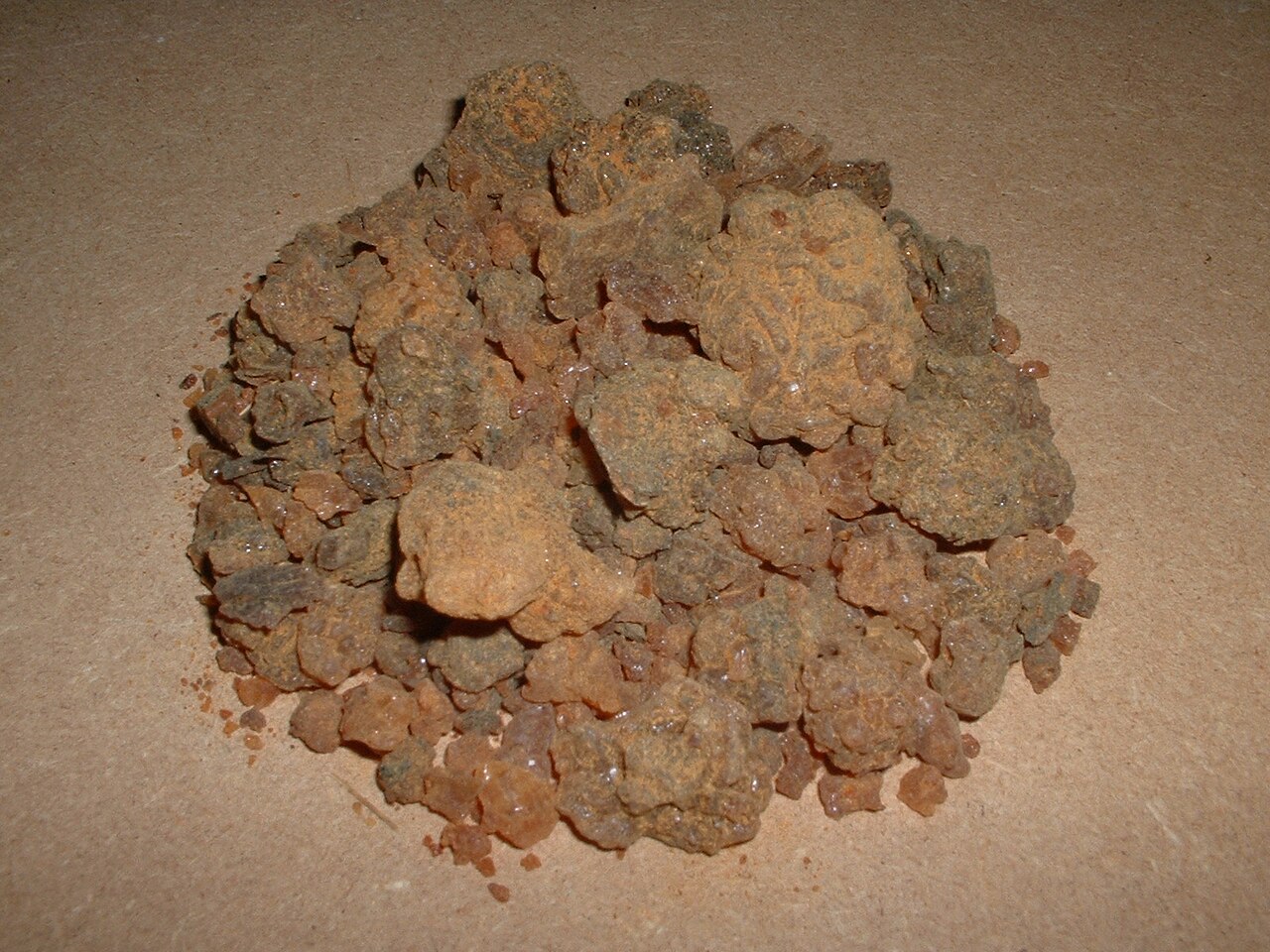
Nature · Resins and the Incense TradeMatthew names three gifts: gold, frankincense and myrrh. Two of the three are not metal or jewels. They are dried tree sap. Cut the bark of the right tree and it bleeds a gum that hardens into pale lumps. Frankincense was burned for its smell. Myrrh was used in perfume and in preparing bodies for burial. Both grew in southern Arabia and had to be carried a very long way, which is why they were costly. So two of the three gifts began as something a tree did when it was cut.
Why this helps you read the BibleKnowing what a gift was made of tells you what it cost to bring. The Bible names the gifts and stops there. Learning the material fills in the distance without adding to the verse.
One of the three gifts
Myrrh as it is traded: hardened lumps of tree resin, reddish brown and brittle. This is the material Matthew names, not the gift itself — the photograph is modern and this resin comes from Oman, at the far end of the trade route. Matthew says what was given and never says how much of it, or what it looked like.
Photograph of myrrh resin from Dhofar, Oman, by Gaius Cornelius. Source: Wikimedia Commons, File:Myrrh.JPG. Public domain.
⚖ Still argued aboutWhat the star was. A planetary conjunction, a comet and a nova have each been proposed, and each has a real difficulty. Matthew tells us what it did and never tells us what it was.
🗣 Say itfrankincenseFRANK-in-sense(fraŋ-kən-sen(t)s)myrrhMUR(mər)MagiMAY-jye(ma-jī)NazarethNAZ-uh-reth(na-zə-rəth)PassoverPASS-oh-ver(pas-ō-vər)Judeajoo-DEE-uh(jü-dē-ə)
worshipv.Matt 2:11
To bow down and give honor to someone
“Matthew 2 uses this word for what the visitors do when they arrive.”
frankincensen.Matt 2:11
A tree resin burned for its sweet smell
“Matthew 2 names this among the three gifts brought.”
myrrhn.Matt 2:11
A tree resin used in perfume and for burial
“Matthew 2 lists this as the third of the gifts.”
departedv.Matt 2:12
Went away from a place
“Matthew 2 says a warning changed the road they took home.”
feastn.Luke 2:41
A yearly festival kept by the whole people
“Luke 2 says the trip to Jerusalem for Passover happened yearly.”
customn.Luke 2:42
The usual way of doing something
“Luke 2 says the yearly trip was the family's settled habit.”
amazedadj.Luke 2:47
Filled with surprise and wonder
“Luke 2 says everyone listening was astonished by what the boy said.”
ⓘ The vocabulary words in this list are selected to help you understand and complete this workbook. Some may not appear word-for-word in your Bible. The example sentences are our own wording, written to make the verse clearer — they are not quotations from it. Read each verse in your own Bible.
1A yearly festival kept by the whole people is a ___.Luke 2:41
2To ‘worship’ someone is to bow down and give them honor.💎 Uses the box aboveMatt 2:11
3Fill in each blank with the correct word.Matt 2:11, 2:12
Word choices:myrrhdepartedfeastamazed- some words will not be used
Gold, frankincense and were the gifts they opened. Matt 2:11
A warning sent them home another way, so they . Matt 2:12
4What is ‘frankincense’?Matt 2:11
5A ‘custom’ is the usual way of doing something.Luke 2:42
6To be ‘amazed’ is to be bored and unsurprised.Luke 2:47
7Fill in each blank with the correct word.Luke 2:41, 2:47
Word choices:feastamazedworshipmyrrh- some words will not be used
The family made the yearly trip to Jerusalem for the . Luke 2:41
All who heard him were at his answers. Luke 2:47
Part 2 · The Coming of Jesus · Matthew 2; Luke 2
Understanding
Show you understood what happens in Matthew 2; Luke 2.
🔍
💎 Lokosmos Treasure Wisdom · a true fact behind the storyWhat Matthew 2 Never Actually Says
Open your Bible atMatthew 2:1–12
Close Reading · Reading Off the AdditionsRead Matthew 2 slowly and count what is actually there. It says wise men, and never says how many. It names three gifts, which is not the same thing as three men. It says they came to a house, not to a stable. Herod asks them when the star appeared, so time has passed. And there are no camels anywhere in the chapter. None of the extra details is wicked. They just are not in the text. A familiar story can add things so quietly that you stop seeing the join. So read with a pencil, and mark only what the page actually says.
Why this helps you read the BibleThe most familiar Bible stories are the ones most likely to grow extra parts. Read for exactly what is on the page. That way you get the Bible itself, and not the version everyone repeats.
In the chapter, and added to it
Diagram of one chapter's contents · the left column is what Matthew 2 states. The right column lists details commonly attached to the story that the chapter does not contain. Calling them additions is not calling them wrong; it is saying where they came from, which is not this page.
Verses: Matthew 2:1–12. Drawn for Lokosmos Academy.
1What do the wise men ask when they reach Jerusalem?Matt 2:2
2Who tells Herod that Bethlehem is the place?Matt 2:4–6
3Where does Matthew say the wise men find the child?Matt 2:11
4How long do Mary and Joseph search before finding Jesus?💎 Uses the box aboveLuke 2:46
5Write the numbers 1–5 in the boxes to show the correct order across Matthew Chapter 2 and Luke Chapter 2. Number 1 = what happens first.Matt 2; Luke 2
Wise men ask where the king of the Jews has been born.
The chief priests and scribes name Bethlehem.
The wise men go home by another road.
Herod is troubled, and all Jerusalem with him.
The wise men fall down and open their treasures.
6The wise men go back to Herod to report what they found.Matt 2:12
7Jesus is twelve years old when he is left behind in Jerusalem.Luke 2:42
Part 3 · The Coming of Jesus · Matthew 2; Luke 2
Literary Craft
Understanding HOW and WHY the story is told across Matthew 2; Luke 2.
🔖
💎 Lokosmos Treasure Wisdom · a true fact behind the storyThe Same Sentence at Both Ends
Open your Bible atLuke 2:40, then 2:52
Literary Craft · A Frame Around a PassageLuke closes this episode the way he opened it. Before the trip he says the boy was growing, gaining strength and wisdom. After it he says almost the same thing again: the boy kept increasing, in wisdom and in stature. The two lines sit like bookends on either side of the story. Writers do that on purpose, and it has a name. It is called an inclusio, and it works like a frame around a picture. When one sentence turns up at both ends of a passage, it shows you where the passage begins and where it ends.
Why this helps you read the BibleThe Bible marks its own edges. Spot a repeated line at both ends and you know which verses belong together. That is the first thing you need before you ask what a passage means.
Inclusio
The same line placed at both ends of a passage, like a frame. Luke 2:40 and 2:52 say almost the same thing about Jesus growing.
Gap
Something a writer deliberately leaves out. Luke gives the three days a number and never describes them.
Accretion
Detail that gathers around a familiar story over time without being in the text. The camels in Matthew 2 are one.
1Luke says almost the same thing at 2:40 and 2:52. What is that called?💎 Uses the box aboveLuke 2:40, 2:52
2Fill in each blank with the correct word.Matt 2; Luke 2
Word choices:gapinclusiocustomaccretion- some words will not be used
Something a writer deliberately leaves out is a .
A line at both ends of a passage is an .
3Luke names three days and never describes them. What is that?Luke 2:46
4The camels in the Christmas story are in Matthew 2.Matt 2:1–12
5An inclusio helps a reader see where a passage starts and stops.Luke 2:40, 2:52
6Fill in each blank with the correct word.Matt 2
Word choices:accretioninclusiogapfeast- some words will not be used
Detail that gathers around a story over time is an .
A thing the writer leaves out on purpose is a .
7Why does it matter to notice what a chapter does not say?Matt 2:1–12
Part 4 · The Coming of Jesus · Matthew 2; Luke 2
Wisdom
Three deeper challenges — no single-word recall. Read, weigh the evidence, and reason it out.
👥
💎 Lokosmos Treasure Wisdom · a true fact behind the storyGoing Up Three Times a Year
Open your Bible atLuke 2:41–44
Feasts & Festivals · Traveling in CompanyLuke says the family went up every year for the feast, as was their custom. Three festivals each year drew people to Jerusalem. Families traveled together for the road, because the road was safer in numbers. A whole village might walk as one company. That is why the parents can go a day's journey before missing him. It is not careless. In a group that size a boy is simply assumed to be walking with somebody else. The crowd that made the trip possible is the same crowd that made losing him easy to explain.
Why this helps you read the BibleA detail that looks odd often makes sense once you know how people traveled. Learn the custom first. Then the Bible stops looking careless where it was only being brief.
Read Matthew 2 and Luke 2:39–52 in your Bible. As you read Matthew 2, write down every detail the chapter actually states about the wise men. Then write beside it every detail you already believed. Compare the two lists. Then read Luke 2:40 and Luke 2:52 one after the other, and see what they do. Keep what the chapters state apart from what you might add: Luke never says what happened during the three days.
Original passage written for this workbook — not a quotation from Scripture.
1Stated in these chapters, or Not stated there? Tap each detail to send it left or right.Sort into two
◄ Stated in these chaptersNot stated there ►
2Match each first detail with the detail paired with it.Match the Pairs
Frankincense→
Myrrh→
The dream→
Three days→
The teachers→
3Fill both blanks to complete the reasoning.💎 Uses the box aboveBuild the Argument
Frankincense and myrrh both grew in southern Arabia and had to be carried a long distance, so Matthew naming them among the gifts , which shows .
That is the whole workbook. The standardized test is optional and is scored separately.
Optional · The Coming of Jesus · Matthew 2; Luke 2
Standardized Test
Reading passage · Walking Up in Company · Ancient Travel and Careful Evidence · ten questions in the shapes a standardized reading test uses: main idea, detail, vocabulary in context, inference, evidence, synthesis, insert text, prose summary and fill in a table.
Optional. This section is not counted in your workbook score. It gets a report card of its own, and skipping it still leaves your workbook complete.
Original passage written for this workbook — not a quotation from Scripture.
Walking Up in Company
Nobody in the ancient world walked a long road alone if they could help it. Roads were not policed along their length, and a traveler by himself was an easy mark. So people moved in groups, and a religious feast supplied the largest groups of all. Jewish sources describe pilgrims going up to Jerusalem for the great festivals, and Greek and Roman writers describe the same habit around their own shrines: whole villages setting out at once, walking together for days, with families mixed in among neighbors. The custom solved a real problem and created a small one. In a company that size, nobody watches one particular child all day, because everyone assumes somebody else is. What the sources cannot tell us is how many people walked in any one year, or who was in any one group. They tell us how the road worked.
1What is the passage mostly about?Main Idea
2Why was walking alone risky?Detail
3In this passage, a “custom” is ___.Vocabulary in Context
4Who describes the same traveling habit besides Jewish sources?Detail
5You can infer that a child could go unmissed for a while because ___.Inference
6Which detail best supports the idea that this habit was widespread?Evidence
7What does the passage say the sources cannot tell us?Synthesis
8Insert Text. Look at the four squares [1]–[4] in the passage below. They mark the places this sentence could be added: “That is the whole reason for the habit.”
Nobody in the ancient world walked a long road alone if they could help it. [1] Roads were not policed along their length, and a traveler by himself was an easy mark. [2] So people moved in groups, and a religious feast supplied the largest groups of all. [3] Jewish sources describe pilgrims going up to Jerusalem for the great festivals, and Greek and Roman writers describe the same habit around their own shrines: whole villages setting out at once, walking together for days, with families mixed in among neighbors. [4]
Where does the sentence fit best?Insert Text
9Prose Summary.The passage explains why people traveled to festivals in large groups. Six statements are listed below. Choose the THREE that best capture what the passage is saying. The other three do not belong — they are small details, or ideas the passage never puts forward. Each correct choice earns a mark of its own.Prose Summary
10Fill in a Table. Sort what these sources settle from what they leave open. Tap each statement to send it to the left column or the right one. Three belong in each.Fill in a Table
◄ The sources show thisThe sources cannot show this ►
Part 3 Complete!
You finished Matthew 2; Luke 2 of The Coming of Jesus.
Independent study guide by Lokosmos Academy. Not affiliated with or endorsed by Crossway or any Bible publisher. Contains original retelling and analysis only; no Scripture text is reproduced in full. Reference edition: keyed to the ESV® Bible — read Matthew 2; Luke 2 in your own Bible alongside this workbook; any Bible works for reading, and the vocabulary and questions follow the ESV’s wording. No ESV® text is quoted in this workbook. ESV® and the English Standard Version® are registered trademarks of Crossway.
Lokosmos Academy is an independent study resource, not affiliated with or endorsed by Crossway or any Bible publisher. This workbook is keyed to the wording of the ESV® Bible; any Bible works for reading — the vocabulary and quiz answers simply follow the ESV’s wording. These workbooks reprint no text of the ESV® Bible; every passage summary, question and example sentence is original wording. ESV® and the English Standard Version® are registered trademarks of Crossway.